

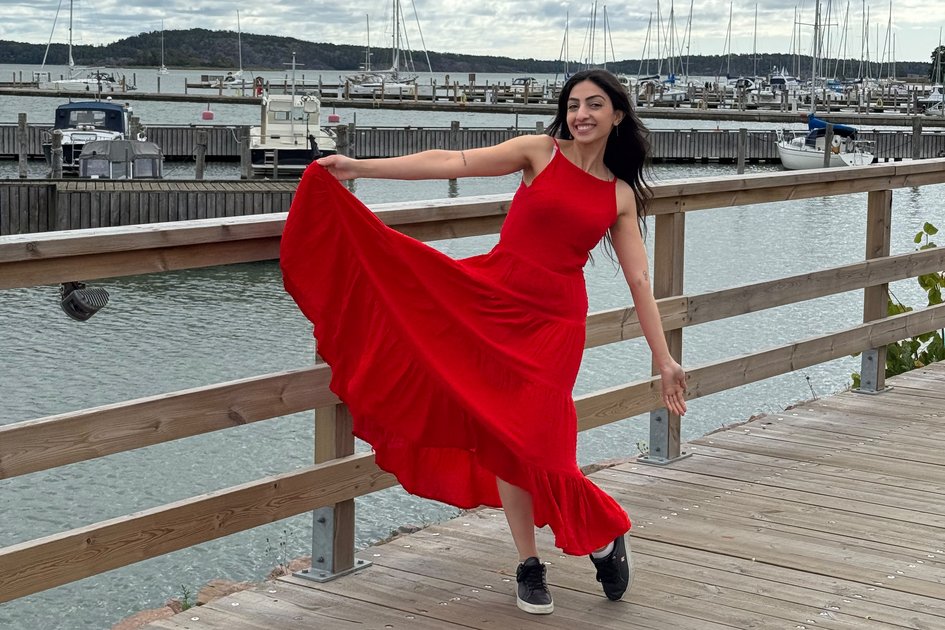
Anita Davoudi came to Germany from Iran to study. She is now studying bio- and environmental engineering at the Ostfalia Campus in Wolfenbüttel and has spent three semesters volunteering as a mentor for other students. In this interview, she talks about her journey to Germany, her involvement at the university and why it is important to accept support.
Mandy Fleer, Ostfalia editorial team: Anita, what was your journey to university like?
Anita: I’m from Iran and knew right after my A-levels that I wanted to study abroad. I was particularly interested in Germany because of its engineering programmes. That’s why I first spent two years learning German and then a year in Oldenburg. Whilst there, however, I realised that a university of applied sciences suited me better than a traditional university.
Did you have any worries before you started your studies?
Anita: Yes , mainly because of the language. I was worried about making mistakes or not being understood. I also didn’t know anyone in Germany and wasn’t sure whether I’d be able to make friends in a small town like Wolfenbüttel. It wasn’t easy at first, but over time I’ve made lots of friends.
What made it easier for you to settle in?
Anita: Above all, the support at the university. You can ask the lecturers questions at any time. There’s learning support and counselling services for students with health challenges. Unfortunately, I only found out about these services later on. Today, I’d recommend that everyone makes use of them as early as possible.
Why did you choose to study Bio- and Environmental Engineering?
Anita: I was already interested in environmental and climate issues at school. I wanted to work in this field later on and do something meaningful. The degree programme combines natural sciences and engineering. That suited my interests perfectly.
What do you particularly like about the course?
Anita: The personal atmosphere. The groups are small and you have direct contact with the lecturers. That was particularly important for me. I have ADHD and learn better when I can ask questions and also do practical work, for example in the lab. That would have been much more difficult at a large university.
You were also involved in student life at the university. What did you do?
Anita: I was a mentor for first-year students and helped international students settle in when they arrived in Germany. This involved helping with very practical matters, such as finding accommodation or dealing with the authorities. I really enjoyed it and got to know lots of new people.
Is there anything about your degree that surprised you?
Anita: Yes, just how demanding some of the foundation subjects are. Maths, in particular, was a real challenge. At the same time, I learnt that you can get help if you ask for it. That helped me a great deal.
What was a particular highlight of your degree for you?
Anita: Prof. Ahrens’food laboratory . Among other things, we brewed our own beer there whilst learning a lot about food safety. Practical projects like that make the course particularly exciting and help me understand the material better.
You’re planning a semester abroad in Finland. What are you particularly looking forward to?
Anita: I’d like to get to know other cultures and see how people study there. I’m also interested in the differences between Germany and Finland in the field of environmental engineering. I think I’ll gain a lot from this, both professionally and personally.
What advice would you give to prospective students?
Anita: Don’t be afraid to ask questions. Whether it’s professors, mentors or the advisory services – there are plenty of people who want to help. You just have to accept that support. And I’d recommend that everyone gets involved in activities alongside their studies. You’ll get to know an incredible number of people and quickly feel part of the university community.
Would you like to study at Ostfalia too? You’ll find an overview of all degree programmes here! If you have any questions, please feel free to contact the Central Student Advisory Service.