A new chapter in life is beginning! On Monday, 21 September 2026, 2,240 first-year students will begin their university studies at Ostfalia. At the start, a lot of things will still feel unfamiliar. So, first things first: settling in, finding your bearings and, step by step, discovering how studying at Ostfalia works. We spoke to a few freshers on the sidelines of the welcome events to find out what they’re looking forward to and what they hope to gain from their time at university.
Hopes: meeting new people, plenty of practical experience, and not too much stress
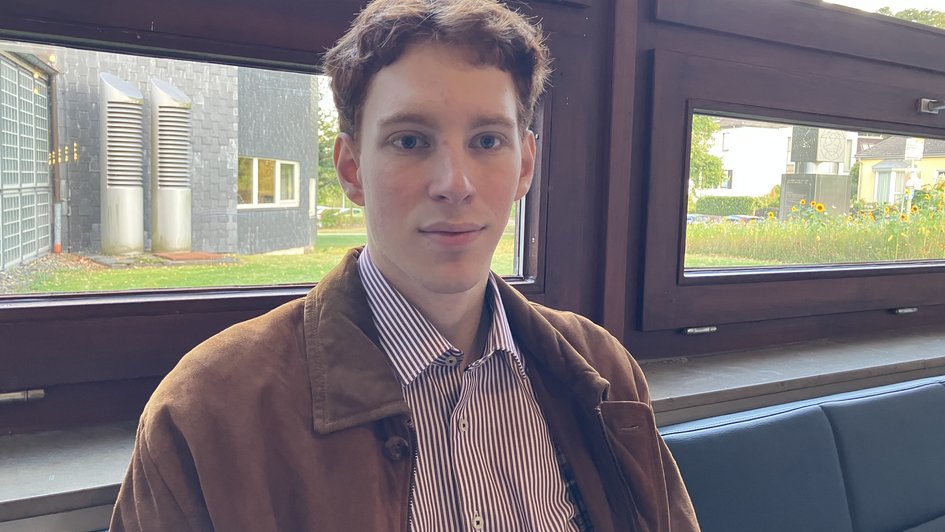
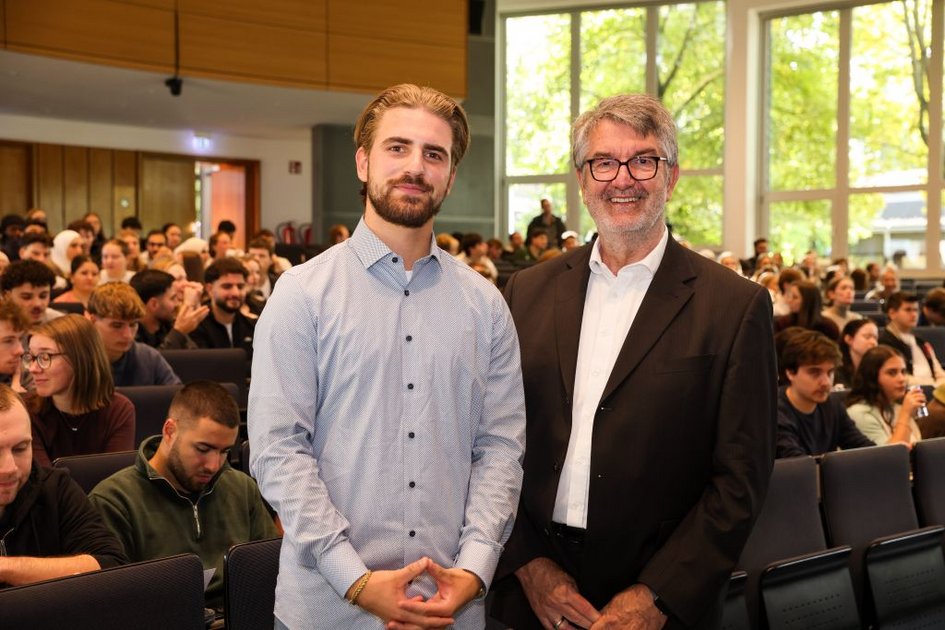
Curt-Gunther Hube (19) is studying Industrial Engineering in Electrical and Information Technology as part of a work-study programme and says: “I’m looking forward to meeting lots of lovely people, laying the foundations for the future and starting to build my own life.” He is particularly drawn to the interdisciplinary nature of his degree: “I find industrial engineering interesting because it combines economic and technical topics. I believe that it is precisely at this intersection that I can communicate effectively and bring different perspectives together.”
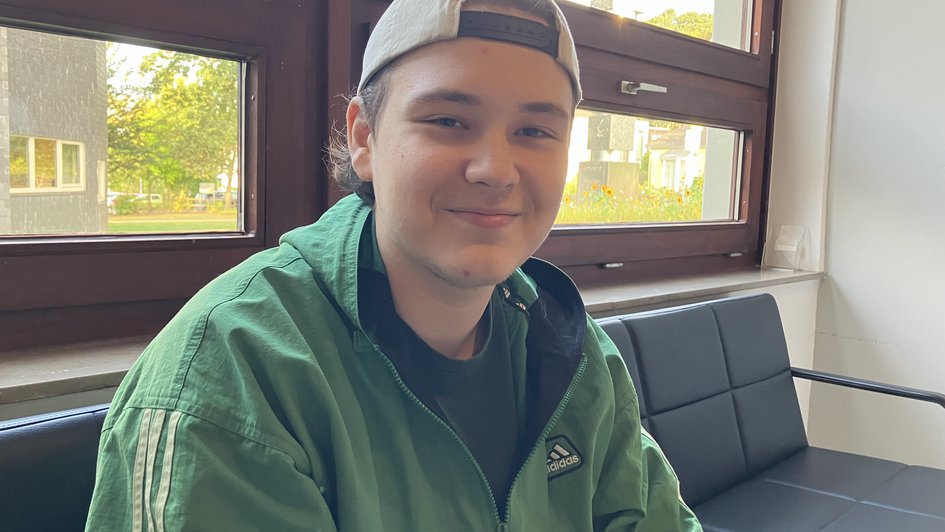
Jan Sefrin (21), a student of Electrical and Information Technology, is equally motivated as he looks forward to the start: “I’m most looking forward to learning a lot.” For him, electrical engineering is more than just a degree course: “I’ve always enjoyed tinkering with electrical components and repairing old games consoles. I also enjoy programming.” The recommendation to come to Ostfalia came from his family: “My brother’s already studying here and he said it’s a good university.”
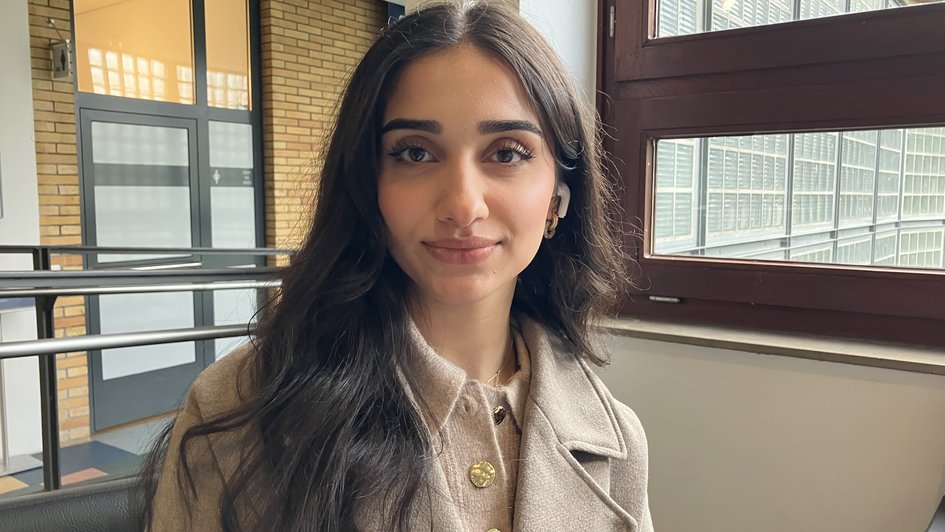
In social work, the focus is on people and practical experience. Rousim Youssef (19) is particularly motivated by “helping people with mental health issues, for example those who can’t get a place in therapy”. She deliberately chose Ostfalia “because there’s a high proportion of practical work and you’re really well prepared for the profession”. Seliva Youssef (20) particularly values the breadth of career opportunities: “It allows you to work in so many different fields.” She also chose Ostfalia because of its proximity to her home in Wolfsburg.
It’s much the same for Luisa Sonntag (21), who is also studying social work and lives in Peine. She brings prior experience to the course: “I did a voluntary social year (FSJ) beforehand, during which I worked with people – especially children – and I really enjoyed it. That’s why working with children interests me the most. As for my time at university, I hope that everything goes well, that I get through it successfully, that I make friends and that I can build a network of contacts.”
It was also the personal touch that drew Annika Neufeld (32) to Ostfalia. The online business studies student says: “I’d previously started studying economics at a distance-learning university, but unfortunately I wasn’t at all happy with the anonymity and the lack of support. That’s why I’m now really looking forward to studying at Ostfalia!”
Inspiring thoughts on starting your studies
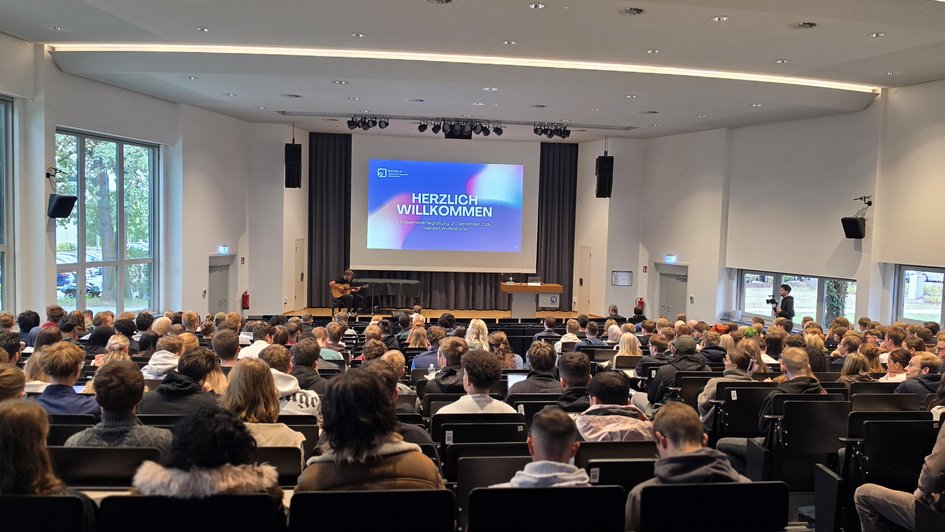
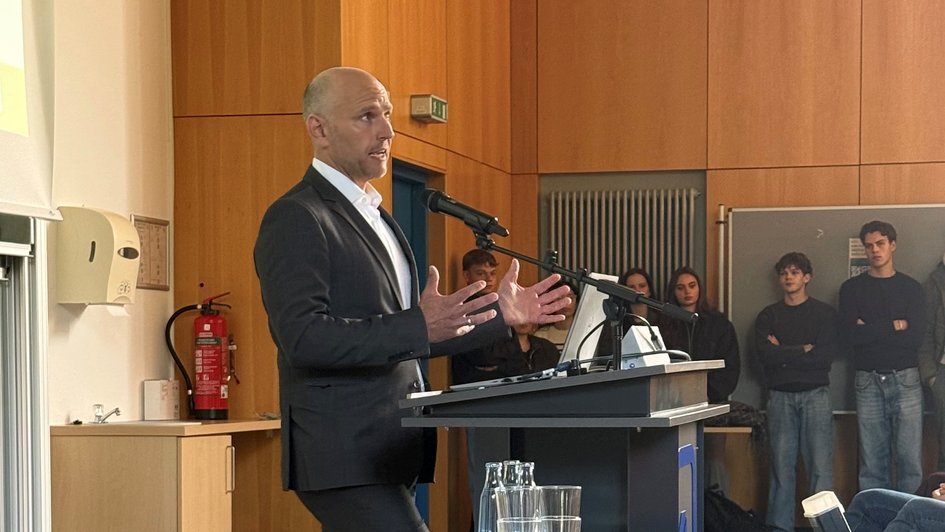
The new students are given a very warm welcome at the various campus locations. In the auditorium in Wolfenbüttel, Volker Küch, President of Ostfalia (with the support of the Executive Board), makes it clear that starting a degree course always involves a step into the unknown. “As you progress on your journey, the world is changing faster than perhaps for any generation before you: that can be unsettling. But you are not merely the ones who have to live with these changes. You can be the ones who shape them. We want to educate you in such a way that you learn to deal with change. Through sound specialist knowledge. Through practical experience. Through scientific thinking. With digital skills. And with the ability to take on responsibility.”
Ostfalia thinks beyond disciplinary boundaries
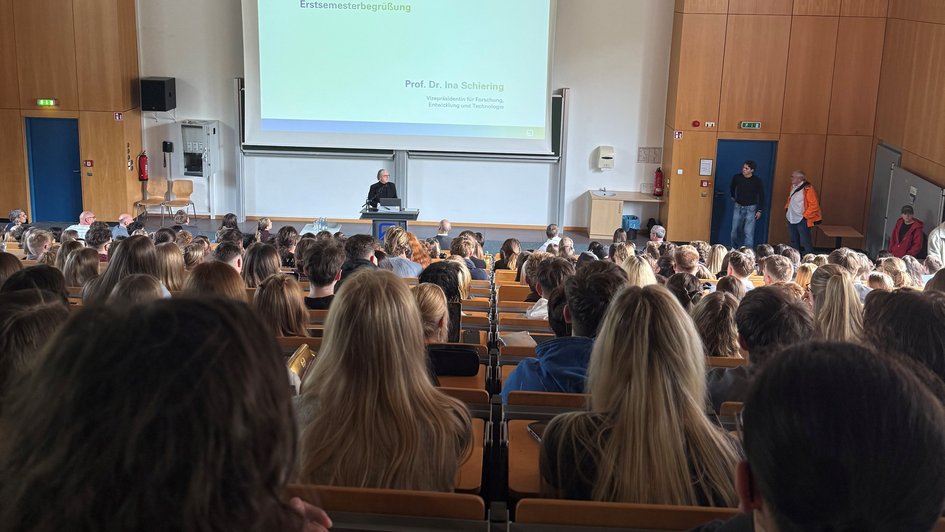
Prof. Dr Ina Schiering, Vice-President for Research, Development and Technology Transfer, also explains at the Salzgitter campus how Ostfalia aims to prepare new students for the future. “You are studying at a university that does not view disciplinary boundaries as limits on thought. Today, engineers must think just as much about sustainability and societal implications as social scientists do about digitalisation. Business needs technology. Technology needs responsibility. And artificial intelligence needs people who understand what they are doing with it. It is precisely these connections that we want to foster.”
At the Wolfsburg campus, Prof. Dr Thomas Benda, Vice-President for Teaching, Studies & Continuing Education, sets the tone for the first-year students. He emphasises: “One of Ostfalia’s particular strengths is that we combine academic education with a practical focus. For us, it’s not just about accumulating knowledge. It’s about applying knowledge: in projects, in laboratories, in collaboration with businesses and institutions, and in addressing specific issues facing society. You are studying at a university that is firmly rooted in the region whilst also making an impact beyond it. You will meet people with different perspectives, fields of expertise and experiences.”
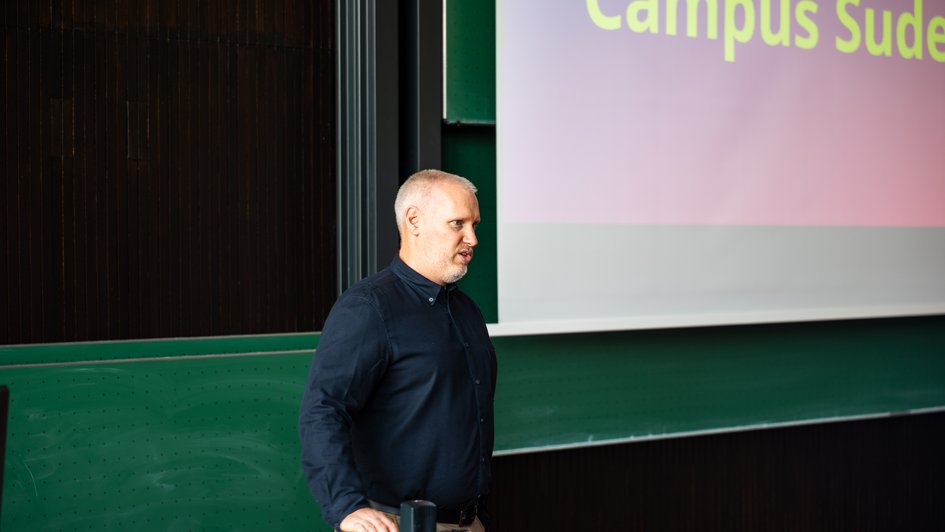
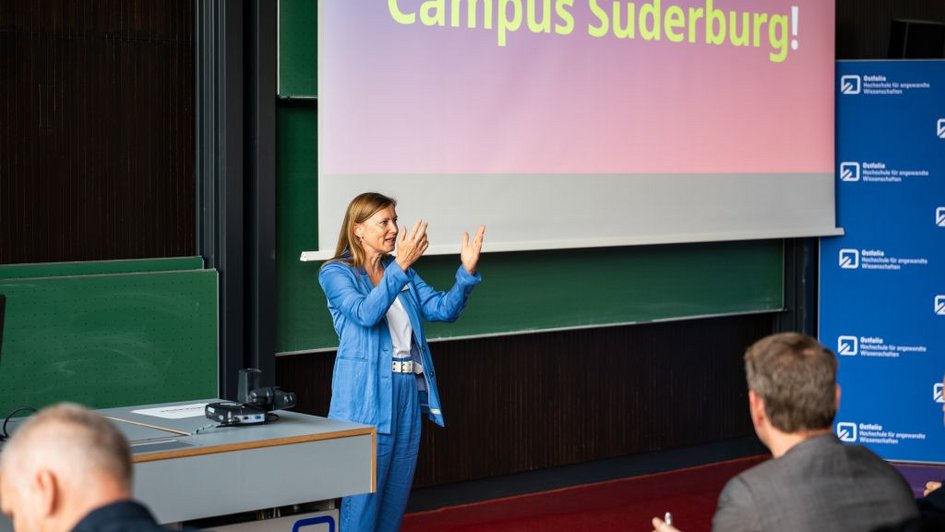
At the Ostfalia Suderburg Campus, the Dean of the Faculty of Civil Engineering, Water and Soil, Prof. Dr Thorsten Albers, and the Dean of the Faculty of Business and Social Work, Prof. Dr Antje Baumgarten, are responsible for helping first-year students get ready for the start of their studies. Prof. Albers congratulates them on their choice of degree programme: “You’ve made a good choice. In our degree programmes, you’ll learn something tangible. We have excellent facilities and, in terms of content, you’ll be superbly prepared for the challenges of the future. Make the most of your time here; enjoy it.”
Prof. Dr Antje Baumgarten adds: “As you can see, everything here is very well organised and has a friendly, family-like atmosphere.” She encourages the new students to think outside the box: “For example, why not attend lectures from other degree programmes and engage in dialogue? After all, many professional challenges can only be solved by drawing on other disciplines and working together with others.”
Hands-on stands, quizzes and campus tours
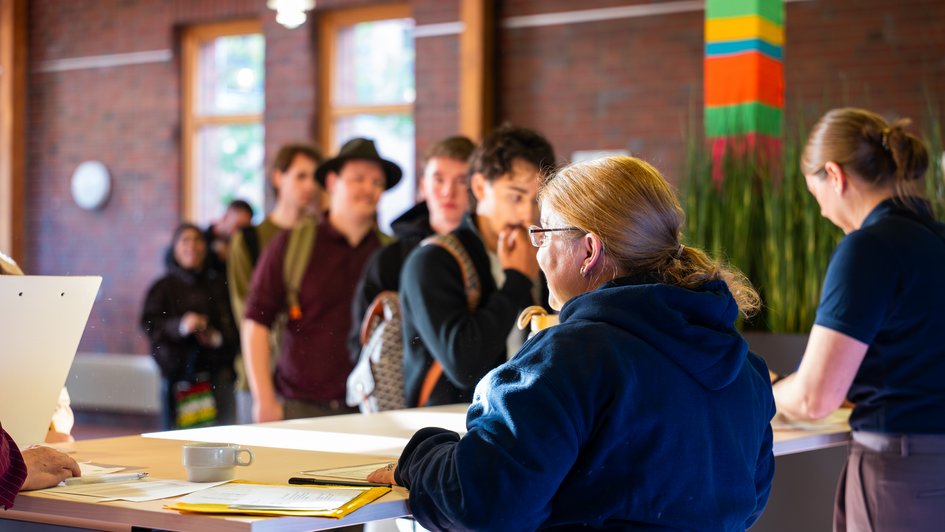
After the official welcome speeches, first-year students are given an overview of where they can find support and what the university has to offer to help with their day-to-day studies. A list of all useful contacts, including all the key information, is also available on the first-year students’ website.
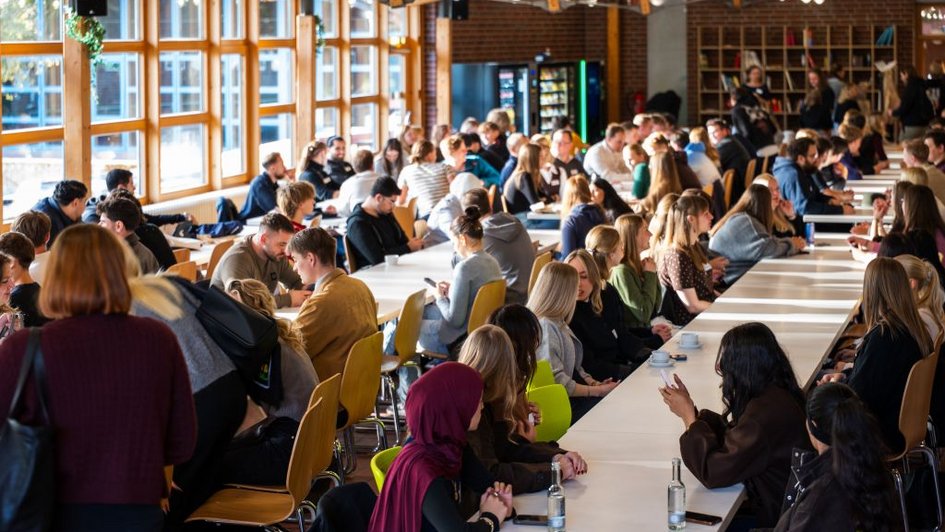
After that, the faculties take over. Through guided tours, introductory sessions and initial exercises, first-year students get to know their field of study. At the same time, campus tours, quizzes and hands-on activities provide opportunities to strike up conversations with one another.
Facts and figures about Ostfalia
Ostfalia University of Applied Sciences is a university of applied sciences in Lower Saxony, founded in 1971, with campuses in Wolfenbüttel, Wolfsburg, Salzgitter and Suderburg. Around 10,200 students are currently enrolled across twelve faculties.
In the winter semester of 2026/27, a total of 2,240 first-year students began their studies at the campus locations in Salzgitter (Faculty of Transport, Sport, Tourism and Media), Suderburg (Faculties of Civil Engineering, Water and Soil Sciences, and Business and Social Work), Wolfenbüttel (Faculties of Electrical and Information Technology, Computer Science, Mechanical Engineering, Law, Social Work and Supply Engineering) and Wolfsburg (Automotive Engineering, Healthcare and Business).