

From Wolfenbüttel to Norway via second-chance education: Luis Arnecke (27) is studying Energy and Building Technology at Ostfalia in Wolfenbüttel and has spent a semester in Norway. In this interview, he talks about his thirst for knowledge, student commitment and semesters abroad.
Mandy Fleer, Ostfalia editorial team: Luis, what was your path from school to studying at Ostfalia?
Luis: After leaving secondary school, I first served in the German army and then trained as a plant mechanic for plumbing, heating and air conditioning technology. During this time, I realised how interested I was in technology. I asked an incredible number of questions - sometimes more than my journeymen would have liked. It would have been obvious to become a master craftsman, but I had the feeling that this wasn't enough for me professionally. So I looked into the requirements for the degree programme and made up for my entrance qualification for universities of applied sciences.
Was it immediately clear to you which degree programme you wanted to do?
Luis: Yes. Energy and Building Technology was the logical choice for me because it ties in directly with my training. Looking back, it was exactly the right decision. Even though I have to say: Mechanical Engineering also appealed to me. That's why I'll soon be starting a Master's degree in this field.
Did you have any respect for the degree programme?
Luis: A little bit of maths. That's why I took part in the preliminary course, which definitely helped. Looking back, I almost have more respect for that decision now than I did then. At that moment, I just went for it.
How was your start at Ostfalia?
Luis: Very positive. The first few semesters in particular were great. You start together, quickly form a solid group, study and party together. I hadn't experienced this sense of community before. I later even spent a semester abroad in Trondheim, Norway, with a fellow student.
What was the highlight of your semester abroad?
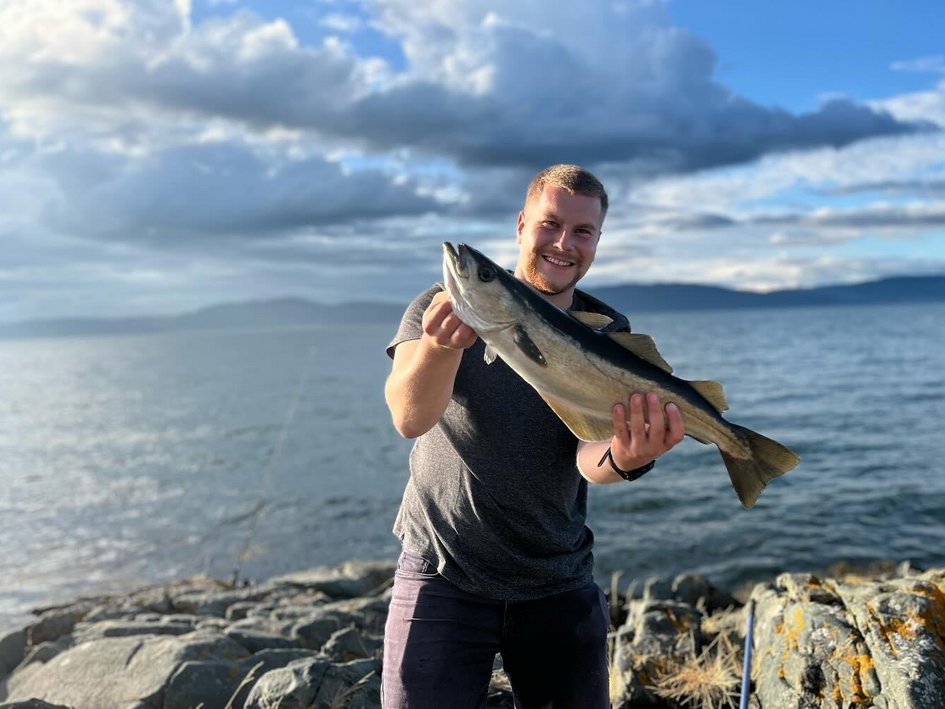
Luis: Actually, the whole stay. The nature was impressive: hiking in the mountains, fishing in the fjord, snow in October, a trip to the Lofoten Islands as far as the Arctic Circle. We even saw reindeer and moose. But it was even more valuable to really get to know the country. Four months is different from a holiday. You experience everyday life and get a realistic picture of life there.
What surprised you about the programme at Ostfalia?
Luis: How approachable the professors are. You always meet at eye level. This creates a very pleasant atmosphere and lowers the inhibition threshold for asking questions. Thanks to my training, I already knew a lot of the course content from practical experience. That's why I found it exciting to understand the technical background during my studies.
What did you do in your free time alongside your studies?
Luis: I was very involved in university life. I was active in the student council and later in the AStA, and helped organise events, regulars' tables and parties. I also ran a tutorial for three semesters. This student work gave me almost as much as the degree programme itself. You get to know people from other degree programmes, take on responsibility and grow enormously as a person. I would say that if you get involved, you take away a completely different experience from your studies.
What tips would you give prospective students?
Luis: Take the preliminary courses, look for study groups early on and keep an open mind. Make the most of student life, this time won't come back. I can also highly recommend a semester abroad. And most importantly, don't be put off if you don't come from an academic family. Interest and commitment count more than background. With motivation and hard work, more is possible than you think.