Energy and building technology
Innovative environmental protection and energy transition are important?
Technical building equipment. Renewable energies. Digital building automation.
The focus is on efficient, sustainable energy and media provision in buildings, from planning to refurbishment. Renewable energies such as photovoltaics, solar thermal energy and heat pumps are used. Digital technologies (IoT) and planning processes (BIM) are used.
This will enable you to set the course in the planning of technical supply systems after graduation. From detached houses to industrial complexes.
Are you particularly interested in sustainable technology? Discover our related degree programmes:
Bio- and Environmental Engineering
Bioengineering and environmental engineering in practice
Energy and building technology in practice
Industrial Engineering Energy/Environment
Industrial Engineering and Management Energy/Environment in the practice network
Facts at a glance
Start your Energy and Building Technology degree programme at Ostfalia!
Become part of something big, show what you've got and rock the future with us. Ready? Let's go!
Apply now (external link, opens in a new window)
Details of the degree programme
Typical professional fields of activity
- Engineering and planning offices
- Companies carrying out technical building services, specialised construction management
- Consultancy firms and service providers
- Building authorities
- Plant engineers and manufacturers of boilers, heat pumps, etc.
- Components and system manufacturers of heating, ventilation, air conditioning, electrical and control technology
- Supply companies
- Energy service providers
Important study contents
- Mathematics, physics, chemistry
- Engineering fundamentals: construction, materials, structural engineering, thermodynamics, fluid mechanics, mechanics, electrical engineering
- Engineering applications: Energy and refrigeration technology, measurement and control technology, urban water management, components of thermal systems
- Building on this: Regenerative energy technology, building automation, sanitary, heating, air conditioning and gas technology
- Compulsory elective subjects: Automation project or regenerative thermal energy supply
- Basic qualifications: Law, economics, management
Specialisation options
- Technical building equipment: Sanitary, heating and air conditioning technology
- Energy and water supply: Water supply, electrical energy supply and gas networks
- Alternative specialisation in "Engineering Pedagogy": The Faculty of Supply Engineering and Leibniz Universität Hannover have concluded a cooperation agreement that paves the way for students interested in pedagogy to become vocational school teachers. To this end, four prescribed vocational education subjects (introduction to work, vocational and business education, theories of vocational didactics, introduction to the study of the vocational specialisation of metal technology for engineers, basics and structures of the vocational specialisation of metal technology) must be taken in the compulsory elective area and a four-week school internship must be completed. After completing the Bachelor's degree programme "Energy and Building Technology", the admission requirements for the Master's degree programme "LBS-SprintING" (duration: 4 semesters) at Leibniz Universität Hannover are fulfilled.
Study programme
- 1.-3rd semester foundation programme
- 4.-7th semester specialised studies including Bachelor's thesis and colloquium
If you start in the summer semester, the duration of study may be extended by one semester
Specialised practical activity
- Six weeks basic internship, ideally before the start of the programme.
- Seven weeks of specialised internship. The entire internship period must be completed by the time you register for your Bachelor's thesis.
Possible Master's programme at the Ostfalia
Study plan
1.-3rd semester Compulsory modules basic cluster Z (1.-3. Semester) Z1 Mathematics 1
Z2 Chemical-biological basics
Z3 Electrical engineering 1
Z4 Project 1: Scientific project on climate change
Z5 Mathematics 2
Z6 Thermodynamics 1
Z7 Physics
Z8 Digital planning with CAD lab
Z9 Fluid mechanics
Z10 Technical project / project management
Z11 Fundamentals of numerical programming
Z12 Urban water management
Compulsory modules Specialised cluster G Buildings (1.-3. Semester) G1 Statics / Civil Engineering
G2 Strength of materials, pipework and apparatus engineering (FRA)
G3 Heating technology 1 (system hydraulics and heating load)
Compulsory modules Specialised cluster E Energy (1.-3. Semester) E1 Materials
E2 Electrical engineering 2
E3 Thermodynamics 2
Compulsory modules basic cluster Z (1.-3. Semester) Z1 Mathematics 1
Z2 Chemical-biological basics
Z3 Electrical engineering 1
Z4 Project 1: Scientific project on climate change
Z5 Mathematics 2
Z6 Thermodynamics 1
Z7 Physics
Z8 Digital planning with CAD lab
Z9 Fluid mechanics
Z10 Technical project / project management
Z11 Fundamentals of numerical programming
Z12 Urban water management
Z1 Mathematics 1
Z2 Chemical-biological basics
Z3 Electrical engineering 1
Z4 Project 1: Scientific project on climate change
Z5 Mathematics 2
Z6 Thermodynamics 1
Z7 Physics
Z8 Digital planning with CAD lab
Z9 Fluid mechanics
Z10 Technical project / project management
Z11 Fundamentals of numerical programming
Z12 Urban water management
Compulsory modules Specialised cluster G Buildings (1.-3. Semester) G1 Statics / Civil Engineering
G2 Strength of materials, pipework and apparatus engineering (FRA)
G3 Heating technology 1 (system hydraulics and heating load)
G1 Statics / Civil Engineering
G2 Strength of materials, pipework and apparatus engineering (FRA)
G3 Heating technology 1 (system hydraulics and heating load)
Compulsory modules Specialised cluster E Energy (1.-3. Semester) E1 Materials
E2 Electrical engineering 2
E3 Thermodynamics 2
E1 Materials
E2 Electrical engineering 2
E3 Thermodynamics 2
Why study Energy and Building Technology at Ostfalia?
- 1.
-
You study with the pioneers:
As the first German university with an accredited Master's programme (2000) and an early Bachelor's conversion (2005), the Faculty of Supply Engineering is unique in Lower Saxony. We are one of only four independent faculties of this kind in Germany.
- 2.
-
Over 50 years of experience:
We have been a pioneer in sustainable engineering training since 1973 and have been scientifically supporting the energy transition from the very beginning.
- 3.
-
Best job prospects:
75% of graduates enter innovative industries directly after graduation - where sustainable solutions and fresh expertise are in demand.
- 4.
-
Practical relevance guaranteed:
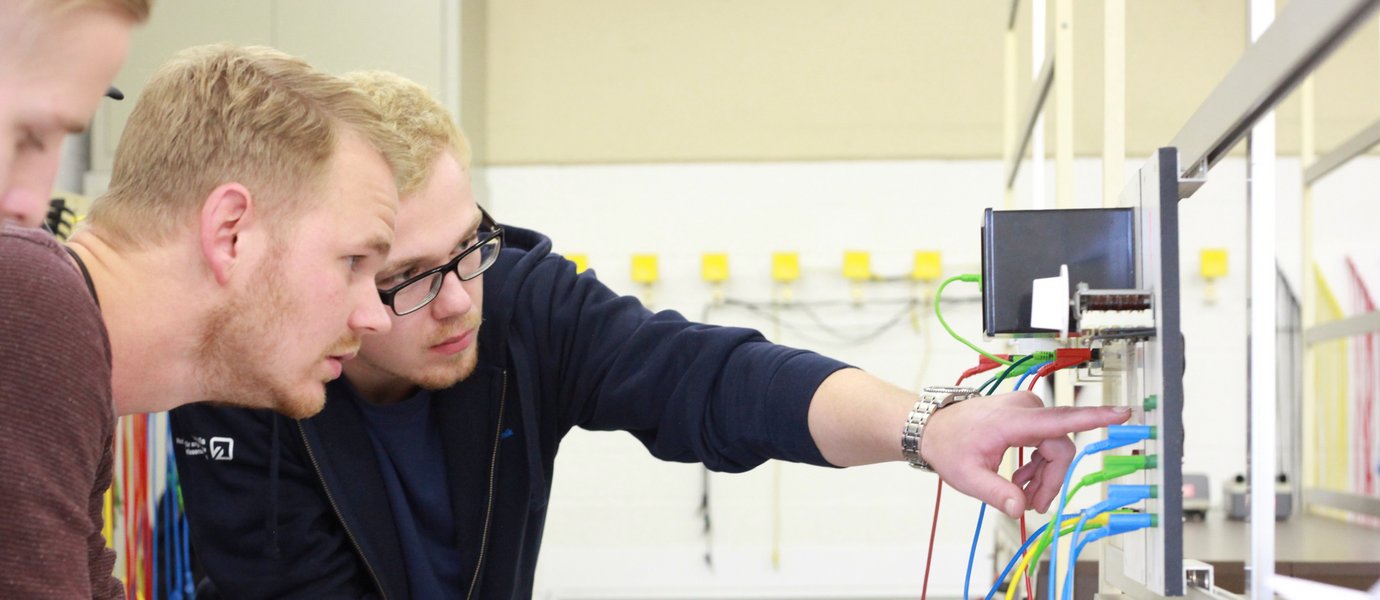
Modern laboratories with high-quality experimental equipment, industry-experienced professors with professional experience and small groups with personal support.
- 5.
-
Internationally networked:
Over 100 international university partnerships, double degrees with partner universities and exchange programmes on all continents.
The Energy and Building Technology degree programme takes place at the Wolfenbüttel campus. The Faculty of Supply Engineering is unique in Lower Saxony.
Useful links and files

Frequently asked questions about the degree programme
Why should I study Energy and Building Technology?
Sustainable building technology is central to the energy transition - and that's exactly what this degree programme prepares you for. You will learn how heat pumps, smart systems and energy-efficient concepts make the difference.
What role do renewable energies play in the degree programme?
Renewable energies are a central component. You will learn how to plan photovoltaics, solar thermal energy, heat pumps and geothermal energy and how to integrate them into buildings. This sets us apart from traditional mechanical engineering degree programmes.
What career paths are possible after graduation?
Graduates work in engineering and planning offices, for building services contractors, plant engineers and manufacturers of boilers or heat pumps, utility companies and energy service providers.
What makes the Energy and Building Technology degree programme at Ostfalia so special?
As the only faculty of supply engineering in Lower Saxony and one of only four independent faculties in Germany, we have over 50 years of experience. Modern laboratory equipment and small groups guarantee personalised support.
Start your Energy and Building Technology degree programme at Ostfalia!
Become part of the energy transition at Lower Saxony's only faculty for supply engineering. As a pioneer of sustainable engineering education since 1973, we offer you the best career opportunities.
Admission-free - winter and summer semesters possible!
Always stay up to date

Your student counselling service
Dipl.-Päd. Katrin Peukert
Building M, Room 118, Wolfenbüttel