Bio- and Environmental Engineering
Do you want to study biotechnology and use environmental technology for the future? Our Bachelor's program: Circular Economy. Bioeconomy. Environmental Engineer
Microplastics in the soil, particulate matter in the air, nitrate in the groundwater - our environment has been changed in many ways - by us humans. We are now faced with the major task of not only analysing and evaluating the pollution, but also developing remediation concepts and preserving biodiversity with our future economic activities.
Biotechnology is becoming increasingly important for this, because if we are thinking about a world without coal and oil, our products must also be made from renewable raw materials.
Join us and be part of shaping a future worth living.
Are you specifically interested in degree programmes with a focus on the environment and the future? Discover our related degree programmes:
Bioengineering and environmental engineering in practice
Energy and Building Technology
Energy and building technology in practice
Industrial Engineering Energy/Environment
Industrial Engineering and Management Energy/Environment in the practice network
Facts at a glance
Start your Bio- and Environmental Engineering degree programme at Ostfalia
Become part of something big, show what you've got and rock the future with us. Ready? Let's go!
Apply online now (external link, opens in a new window)
Details of the degree programme
Typical professional fields of activity
- Biotechnological, pharmaceutical and chemical industry
- Environmental protection and monitoring
- Authorisation and supervisory authorities
- Utility companies
- Waste and wastewater management
- Recycling, renaturalisation and restoration of ecosystems
- Research and development
- Engineering and planning offices etc.
Important study contents
- Biological-chemical basics: e.g. organic and biochemistry, inorganic, physical and analytical chemistry, molecular, cell and microbiology
- Engineering fundamentals: e.g. mathematics, physics, electrical engineering, control engineering, digital planning/CAD, urban water management
- Environmental engineering applications: Terrestrial and aquatic ecosystems, air pollution control and exhaust gas purification, water, wastewater and waste technology, plant design and construction
- Applied biotechnology: bioprocess engineering, modelling & simulation of biotechnological processes, biotechnological production processes, material biomass utilisation
- Compulsory electives: specialisation laboratories for biotechnology and environmental technology, PIUS, bioeconomy
- Basic qualifications: Law/Business Administration, Management, Project work
Specialisation options
The compulsory electives in the higher semesters allow you to hone your profile. You decide whether you want to study biotechnology and environmental technology with an experimental focus or project-based according to your interests.
- Biotechnology specialisation lab or bioeconomy project
- Environmental Engineering specialisation lab or Production Integrated Environmental Protection (PIUS) project
Please note
A stay abroad/degree with adouble degreeis possible
Study programme
- 1.-3rd semester foundation programme
- 4.-7th semester specialised studies including Bachelor's thesis and colloquium
If you start in the summer semester, the duration of study may be extended by one semester
Specialised practical activity
- Six weeks basic internship, ideally before the start of the programme.
- Seven weeks of specialised internship. The entire internship period must be completed by the time you register for your Bachelor's thesis.
Possible Master's programme at the Ostfalia
Study plan
1.-3rd semester Compulsory modules basic cluster Z (1.-3. Semester) Z1 Mathematics 1
Z2 Chemical-biological basics
Z3 Electrical engineering 1
Z4 Project 1: Scientific project on climate change
Z5 Mathematics 2
Z6 Thermodynamics 1
Z7 Physics
Z8 Digital planning with CAD lab
Z9 Fluid mechanics
Z10 Technical project / project management
Z11 Fundamentals of numerical programming
Z12 Urban water management
Compulsory modules subject cluster B Bio (1.-3. Semester) B1 Organic and Biochemistry
B2 Molecular and cell biology
B3 Analytical Chemistry
Compulsory modules Specialised cluster U Environment (1.-3. Semester) U1 Immission control/air pollution control
U2 Inorganic and Physical Chemistry
U3 Instrumental analysis
Compulsory modules basic cluster Z (1.-3. Semester) Z1 Mathematics 1
Z2 Chemical-biological basics
Z3 Electrical engineering 1
Z4 Project 1: Scientific project on climate change
Z5 Mathematics 2
Z6 Thermodynamics 1
Z7 Physics
Z8 Digital planning with CAD lab
Z9 Fluid mechanics
Z10 Technical project / project management
Z11 Fundamentals of numerical programming
Z12 Urban water management
Z1 Mathematics 1
Z2 Chemical-biological basics
Z3 Electrical engineering 1
Z4 Project 1: Scientific project on climate change
Z5 Mathematics 2
Z6 Thermodynamics 1
Z7 Physics
Z8 Digital planning with CAD lab
Z9 Fluid mechanics
Z10 Technical project / project management
Z11 Fundamentals of numerical programming
Z12 Urban water management
Compulsory modules subject cluster B Bio (1.-3. Semester) B1 Organic and Biochemistry
B2 Molecular and cell biology
B3 Analytical Chemistry
B1 Organic and Biochemistry
B2 Molecular and cell biology
B3 Analytical Chemistry
Compulsory modules Specialised cluster U Environment (1.-3. Semester) U1 Immission control/air pollution control
U2 Inorganic and Physical Chemistry
U3 Instrumental analysis
U1 Immission control/air pollution control
U2 Inorganic and Physical Chemistry
U3 Instrumental analysis
Why study Biological and Environmental Engineering at Ostfalia?
- 1.
-
You study with the pioneers:
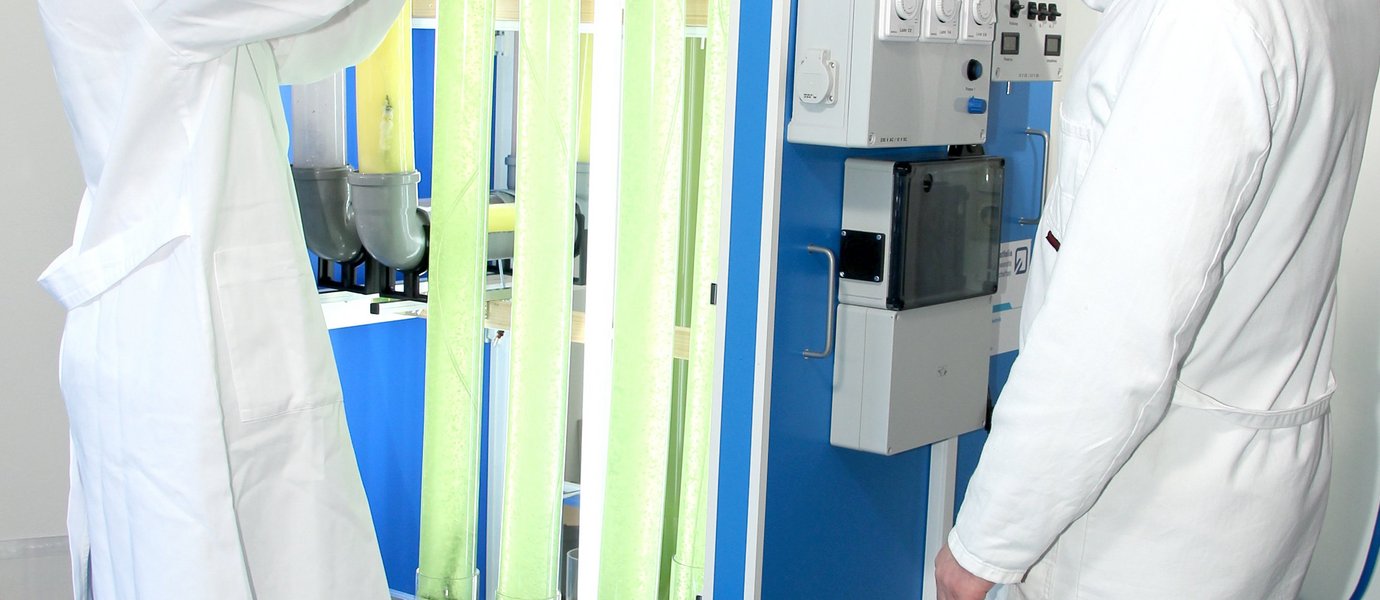
The Faculty of Supply Engineering has been a pioneer in sustainable engineering education for over 50 years. As the only faculty of its kind in Lower Saxony, we offer you state-of-the-art laboratories to study bioengineering and environmental engineering.
- 2.
-
Best job prospects:
The demand for experts in circular economy and environmental engineering is constantly increasing. Our graduates are in high demand in the growing biotechnology and environmental engineering sector.
- 3.
-
Practical relevance guaranteed:
Small groups, personal support and professors with industry experience. Our state-of-the-art testing facilities enable you to work on practical projects from the very first semester.
- 4.
-
Internationally networked:
Over 100 university co-operations worldwide. Double degree possible. Optional English-language courses prepare you for the global world of work.
The Bio- and Environmental Engineering degree programme takes place at the Wolfenbüttel campus. The Faculty of Supply Engineering is Lower Saxony's centre of excellence for sustainable technologies.
Useful links and files
Frequently asked questions about the degree programme
Why should I study Biological and Environmental Engineering?
The combination of biotechnology and environmental engineering is future-proof. As an Environmental Engineering and Circular Economy Engineer, you will actively shape the energy transition and develop sustainable solutions for environmental problems.
Which technologies are in the focus when studying biotechnology?
You will learn how biotechnological processes work, research microorganisms in microbiology and deal with processes for utilising biomass. Modern laboratories for molecular and analytical biotechnology are at your disposal.
What career paths are possible after studying environmental engineering?
Graduates work in the biotechnological and pharmaceutical industries, in environmental protection, with licensing and supervisory authorities, in waste and wastewater management and in engineering and planning offices.
What makes the Bio- and Environmental Engineering degree programme at Ostfalia so special?
As Lower Saxony's only faculty for supply engineering, we have been offering expertise in sustainable engineering education for over 50 years. State-of-the-art laboratories, small groups and the close integration of biotechnology and environmental engineering are our strengths.
Secure your study place. Study Biological and Environmental Engineering now!
Become part of shaping a sustainable future at Lower Saxony's only Faculty of Supply Engineering. As a pioneer in environmental technology training, we offer you the best career opportunities in the growing markets for biotechnology and environmental engineering.
Admission-free - winter and summer semesters possible!
Always stay up to date

Your student counselling service
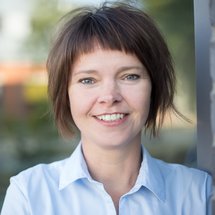
Dipl.-Päd. Katrin Peukert
Building M, Room 118, Wolfenbüttel