
Nursing (part-time with integrated vocational training)
Do you want to improve the current care situation and counteract the shortage of skilled nurses with innovative solutions?
Facts at a glance
Apply now!
Secure a place to study with us at Ostfalia in Wolfsburg!
To the application (external link, opens in a new window)
Our video about the degree programme
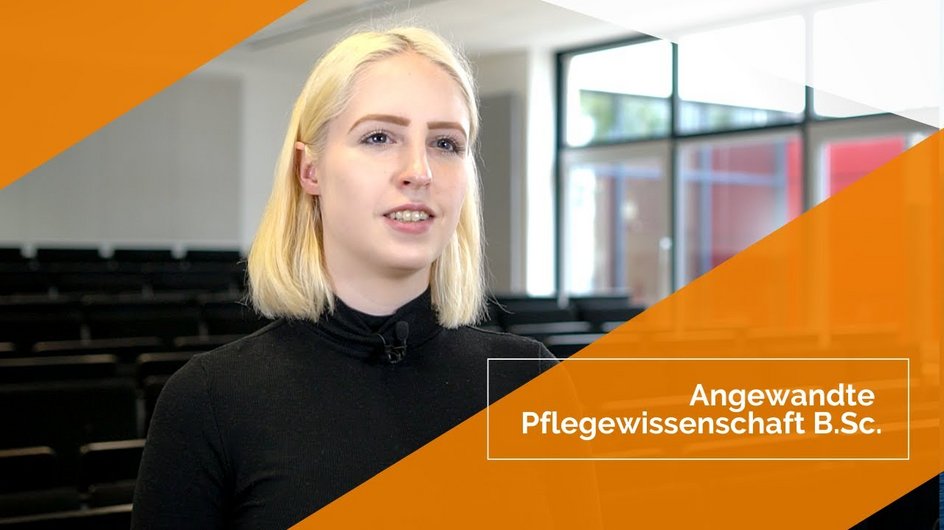

Your cookie settings have blocked this video.
Details of the degree programme
Professional fields of activity
The Nursing degree programme gives you the opportunity to prepare for a future-proof career in nursing alongside your training. You will not only expand your practical skills, but also acquire sound science-based competences that will enable you to plan, manage and further develop complex nursing processes.
As a graduate of this degree programme, you will not only work in patient-centred care, but will also play an active role in the further development of nursing care.
Even if you have already completed your nursing training, you can gain further qualifications on this degree programme while working.
Typical professional fields of activity:
- Nursing expert
- Case manager
- Admission manager
- Discharge manager
- Operating theatre manager
- Primary Nurse
- Practice Instructor
- Head of nursing
- Team/shift leader
- Residential area manager
- Responsible nursing professional
- Quality officer
Note: With the Bachelor's degree, our graduates receive the additional certificate"Practical Instructor" (application by e-mail to Kristin Peter: pflegewissenschaft-g(at)ostfalia.de) (opens your email program).
Programme content
Important study contents are:
- Health and nursing sciences
- Law
- Digitalisation in nursing care
- Evidence Based Nursing
- Diversity Management
- Scientific work
- Research methodology
- Case management
- Counselling skills
- Quality Management
Module overview table (PDF, 106.02 KB) (opens in a new window), (not accessible)
Module handbook (PDF, 1.05 MB) (opens in a new window), (not accessible) (Status: August 2024)
Study programme
Would you like to study Applied Nursing Science alongside your training? To apply, you will first need a training contract with one of our practice partners (listed under "Practice-based learning") for these training occupations:
- Nursing specialist
- Health and paediatric nurse
- Geriatric nurse
Have you already completed your training in one of these professions and would like to study Applied Nursing Science in a practical programme while working? Then the obligation to cooperate does not apply to you.
The Applied Nursing Science degree programme is structured as follows:
1. up to the 5th semester: part-time or part-time study programme with 10 block weeks and individual examination dates at the university in Wolfsburg
6. up to the 8th semester (after passing exams/graduation): part-time study programme with 3 to 4 block weeks per semester at the university in Wolfsburg
8. Semester: Bachelor's thesis
Contact study timetable WS 2025/26 (PDF, 333.38 KB) (opens in a new window), (not accessible)
Practical learning
This degree programme for nurses, which can be taken alongside training (or alongside work), focuses on the transfer of practical study to practice. Practice-orientated teaching methods such as case studies, project work and simulations give you the opportunity to put theoretical concepts directly into practice. Our lecturers and professors not only contribute their extensive knowledge, but also valuable practical experience. They are well networked and know exactly what is needed in the care sector.
The Faculty of Healthcare works closely with its practice partners in the care sector, so that you can benefit from a broad network. Our simulation centre with its high-quality technical equipment offers you the opportunity to learn and develop your skills in a realistic environment.
The Ostfalia Faculty of Healthcare has concluded cooperation agreements with the nursing schools listed here for the dual study programme "Applied Nursing Science in Practice".
Prospective students should send their application for a training place on the dual study programme "Applied Nursing Science in the Practice Network" directly and exclusively to the nursing schools.
Our practice partners in Wolfsburg, Braunschweig, Wolfenbüttel, Salzgitter, Peine, Magdeburg
- Wolfsburg City Hospital (external link, opens in a new window)
- Diakonisches Werk Wolfsburg e.V. (external link, opens in a new window)
- Braunschweig Clinical Centre gGmbH (external link, opens in a new window)
- EV.-LUTH. Deaconess Institution Marienstift (external link, opens in a new window)
- Helene Engelbrecht School (external link, opens in a new window)
- Duchess Elisabeth Hospital Nursing School Foundation (external link, opens in a new window)
- Städt. Wolfenbüttel Clinic gGmbH (external link, opens in a new window)
- St. Elisabeth Hospital Salzgitter gGmbH (external link, opens in a new window)
- Fredenberg Vocational Schools (external link, opens in a new window)
- Peine Hospital (external link, opens in a new window)
- University Hospital Magdeburg (external link, opens in a new window)
Our practice partners in Bad Pymont/Holzminden, Buchholz, Celle, Einbeck, Hanover, Goslar, Seesen
- Agaplesion Ev. Bathildis Hospital (external link, opens in a new window)
- Buchholz Hospital (external link, opens in a new window)
- Celle General Hospital (external link, opens in a new window)
- Einbeck Citizens' Hospital (external link, opens in a new window)
- Vinzenz Hospital Hanover (external link, opens in a new window)
- Nursing school centre Goslar (external link, opens in a new window)
- Asklepios Clinic Schildautal Seesen (external link, opens in a new window)
Our practice partners in Nienburg, Oldenburg, Rotenburg (Wümme), Stade, Walsrode
- Helios Clinics Mitttelweser (external link, opens in a new window)
- Evangelical Hospital Oldenburg (external link, opens in a new window)
- Agaplesion Diakonieklinikum Rotenburg (external link, opens in a new window)
- Elbe clinics Stade-Buxtehude (external link, opens in a new window)
- Heidekreis-Klinikum Soltau and Walsrode (external link, opens in a new window)
After the Bachelor
Would you like to complete a Master's degree programme after your Bachelor's degree?
At the Faculty of Healthcare, you can study the consecutive Master's degree programme Integrated Care Management in Healthcare M.A. (external link, opens in a new window) or the consecutive Master's degree programme Vocational Education for Healthcare Professions (external link, opens in a new window).
Study plan
1. Semester Health and nursing sciences (1. Semester) Introduction to the health sciences:
Fundamentals of health sciences (historical development, definition of health and illness, theories and concepts of health and
Theories and concepts of health and disease, models of health and disease); basic terms, objects and concepts of health sciences (basics and differences between health promotion and
Health promotion and prevention, basics of epidemiology, basics of social epidemiology, health and care reporting, salutogenesis,
Empowerment, ICF, health inequality, social situation, life situation model)
Introduction to nursing science:
Fundamentals of nursing science (historical development in a national and international context, subject area and central questions); scientific theoretical foundations and significance for gaining knowledge; theo-
theories and models in nursing and nursing science; central terms and concepts of nursing science (e.g. need for care, need for care, nursing process, assessments); basics of professional theory; reference disciplines of nursing science
Nursing science
Law in the care sector (1. Semester) Basics of social insurance law:
Basics of the social insurance system; benefit and service provision law of the statutory health insurance; benefit and service provision law of the social long-term care insurance including aspects of social welfare and nursing home law
and care home law aspects
Private and criminal law framework conditions:
Legal relationships between service providers and patients or persons in need of care; introduction to care law; responsibility and civil liability in care; fundamentals and principles of criminal law; criminal liability for offences in the care sector
Fundamentals of digitalisation in care I (1. Semester) Introduction to nursing and healthcare informatics:
IT in nursing and healthcare; models of nursing informatics, IT systems
Health and nursing sciences (1. Semester) Introduction to the health sciences:
Fundamentals of health sciences (historical development, definition of health and illness, theories and concepts of health and
Theories and concepts of health and disease, models of health and disease); basic terms, objects and concepts of health sciences (basics and differences between health promotion and
Health promotion and prevention, basics of epidemiology, basics of social epidemiology, health and care reporting, salutogenesis,
Empowerment, ICF, health inequality, social situation, life situation model)
Introduction to nursing science:
Fundamentals of nursing science (historical development in a national and international context, subject area and central questions); scientific theoretical foundations and significance for gaining knowledge; theo-
theories and models in nursing and nursing science; central terms and concepts of nursing science (e.g. need for care, need for care, nursing process, assessments); basics of professional theory; reference disciplines of nursing science
Nursing science
Introduction to the health sciences:
Fundamentals of health sciences (historical development, definition of health and illness, theories and concepts of health and
Theories and concepts of health and disease, models of health and disease); basic terms, objects and concepts of health sciences (basics and differences between health promotion and
Health promotion and prevention, basics of epidemiology, basics of social epidemiology, health and care reporting, salutogenesis,
Empowerment, ICF, health inequality, social situation, life situation model)
Introduction to nursing science:
Fundamentals of nursing science (historical development in a national and international context, subject area and central questions); scientific theoretical foundations and significance for gaining knowledge; theo-
theories and models in nursing and nursing science; central terms and concepts of nursing science (e.g. need for care, need for care, nursing process, assessments); basics of professional theory; reference disciplines of nursing science
Nursing science
Law in the care sector (1. Semester) Basics of social insurance law:
Basics of the social insurance system; benefit and service provision law of the statutory health insurance; benefit and service provision law of the social long-term care insurance including aspects of social welfare and nursing home law
and care home law aspects
Private and criminal law framework conditions:
Legal relationships between service providers and patients or persons in need of care; introduction to care law; responsibility and civil liability in care; fundamentals and principles of criminal law; criminal liability for offences in the care sector
Basics of social insurance law:
Basics of the social insurance system; benefit and service provision law of the statutory health insurance; benefit and service provision law of the social long-term care insurance including aspects of social welfare and nursing home law
and care home law aspects
Private and criminal law framework conditions:
Legal relationships between service providers and patients or persons in need of care; introduction to care law; responsibility and civil liability in care; fundamentals and principles of criminal law; criminal liability for offences in the care sector
Fundamentals of digitalisation in care I (1. Semester) Introduction to nursing and healthcare informatics:
IT in nursing and healthcare; models of nursing informatics, IT systems
Introduction to nursing and healthcare informatics:
IT in nursing and healthcare; models of nursing informatics, IT systems
Useful links and files




Contact persons
-
Master of Arts, Dipl.-Pflegewirtin (FH) Kristine Peter
Fachstudienberatung Angewandte Pflegewissenschaft im Praxisverbund B.Sc. und Berufspädagogik und Management in der Pflege B.Sc., Faculty of Health and Health Care Sciences
Building G, Room 231, Wolfsburg

-
Prof. Dr. phil. Günter Meyer
Dekan und Studiengangsleitung Angewandte Pflegewissenschaft im Praxisverbund B.Sc., Faculty of Health and Health Care Sciences
Building G, Room 125, Wolfsburg