

Glorious bathing weather attracts many people to natural lakes or man-made bodies of water. They attract people to splash around and swim - but what about the water quality? For example, masses of blue-green algae (cyanobacteria) can jeopardise health and ecosystems, but they are not always visible to the naked eye. Toxic algal blooms are increasing with climate change. In standard water monitoring practice, personnel take water samples on site and have them analysed in the laboratory. This is expensive and time-consuming. "The demand for cost-effective and reliable systems is increasing, especially in smaller municipalities," says Dr Hedda Sander from the Centre for Scientific, Interdisciplinary Risk Management and Sustainability at Ostfalia University. "This motivates us to work on intelligent solutions."
Start-up develops sensor technology and AI
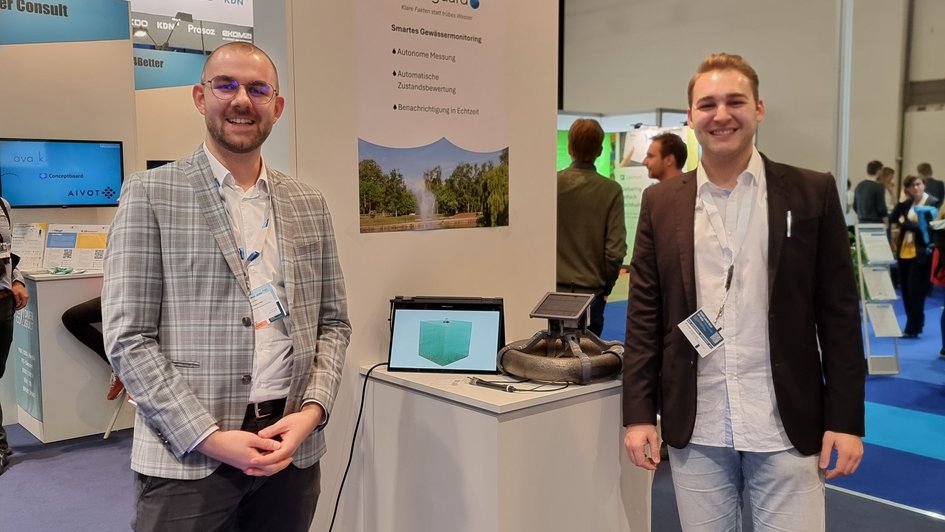
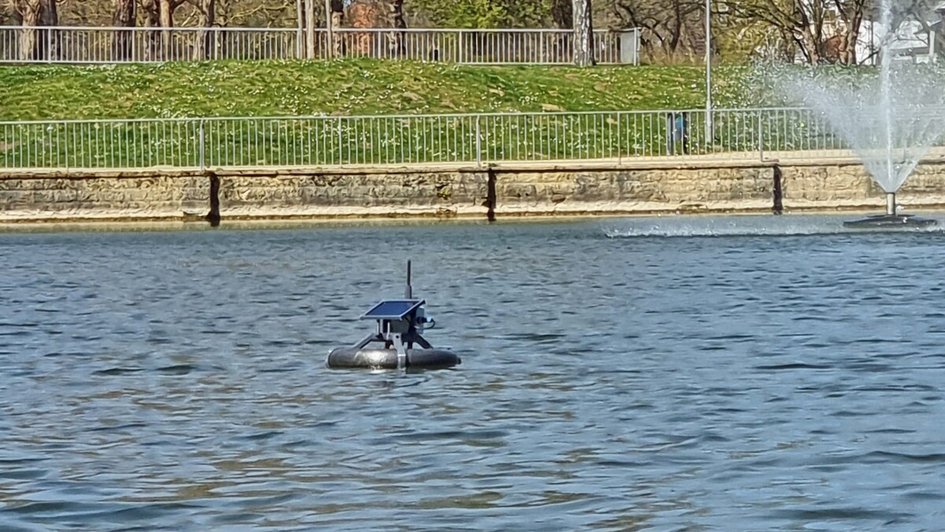
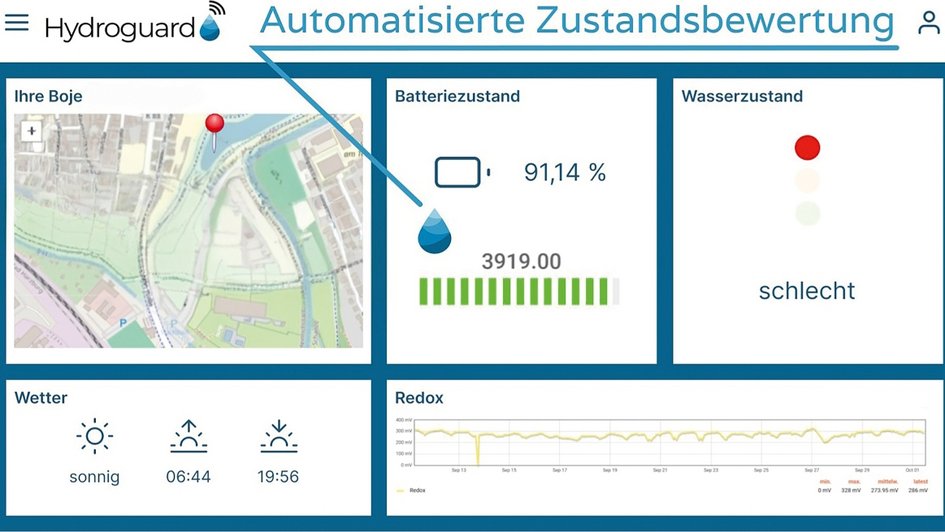
The goal is an innovative system that autonomously monitors water quality in inland waters in real time. "We are developing a smart buoy that continuously measures environmental factors in order to predict algal blooms," explains Hedda Sander. With the help of machine learning, this data is evaluated and visualised on a dashboard at the relevant institutions. The collaborative project is supported by Prof Dr Reinhard Gerndt from the Faculty of Computer Science and funded by the Federal Ministry of Research, Technology and Space (BMFTR). Students Tobias Apenzeller and Lorenzo Puglisi are transferring the research findings into practice with their start-up Hydroguard UG (external link, opens in a new window). They are developing the sensor technology and the associated AI.
Measure, predict, warn, intervene
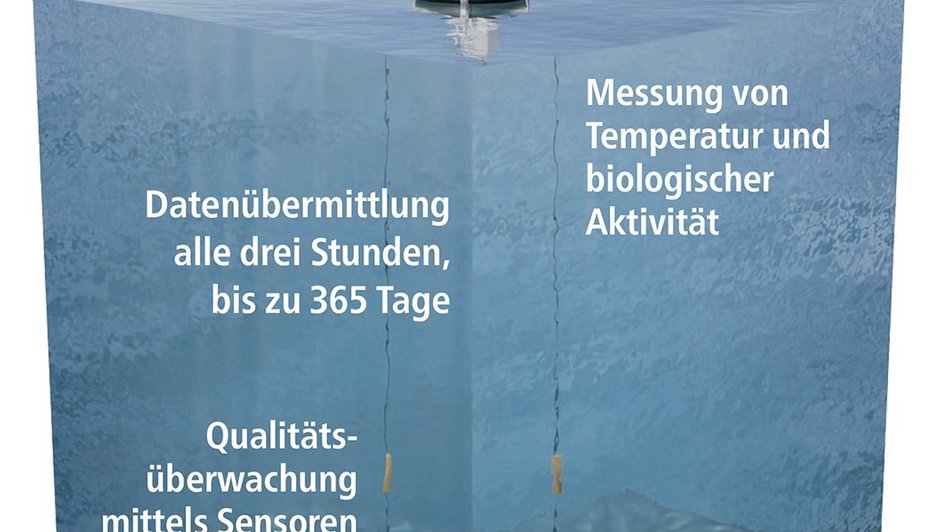
The first prototypes are already being tested in practice by customers, for example in a local recreation area in Wolfenbüttel. There, buoys float on the water and automatically measure site-specific factors such as chlorophyll and oxygen content, air and water temperatures. The measurement data is transmitted to a server by radio and initially used to train the AI. "One of the most important tasks is to identify suitable parameters for the AI-based autonomous prediction of algal blooms," emphasises Lorenzo Puglisi. The system should also be able to be flexibly adapted to different bodies of water and their environment. The founding team is responsible for the installation, maintenance and operation of the system. "Customers can call up all data and forecasts at any time and, if necessary, issue warnings promptly or take local measures such as nutrient controls," says Lorenzo Puglisi, outlining the monitoring function and crisis intervention.
Inform and participate via the citizen app
In addition to transparent information about the condition of a body of water, in the medium term the public should be able to actively participate in biomonitoring via a citizen app. For example, interested parties could call up forecasts or upload images of the watercourse for an initial assessment. "In this way, we are involving the public in citizen science," Hedda Sander points out, "and at the same time sensitising them to an environmental issue that is relevant to health." She also sees a further advantage in the project "for us researchers, because we learn a lot about the practical transfer of technological developments". The founding team's experiences are also presented in lectures and seminars at Ostfalia.
The original article appeared in "ti" 3/2025: Transfer into practice. Knowledge to the power of N..