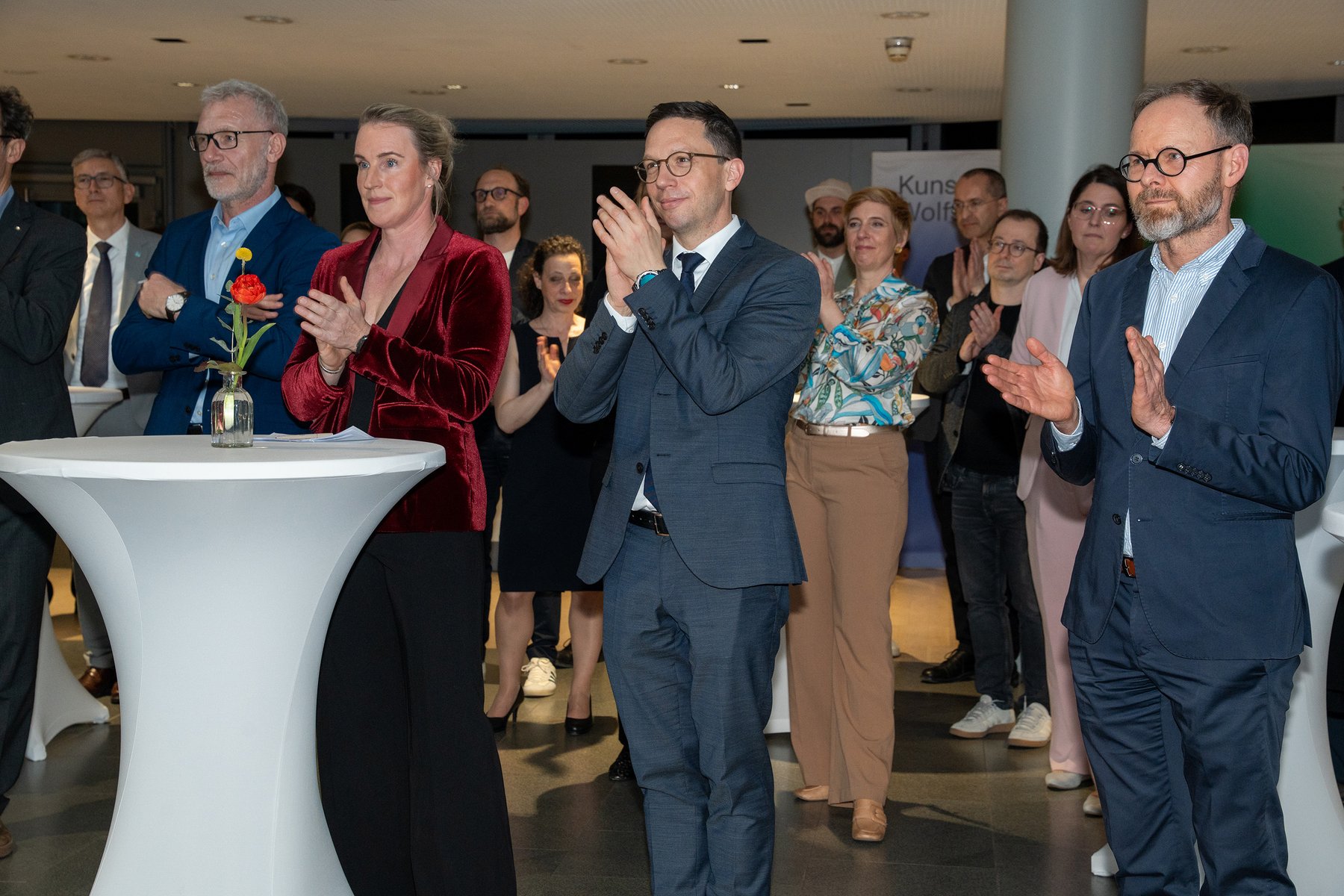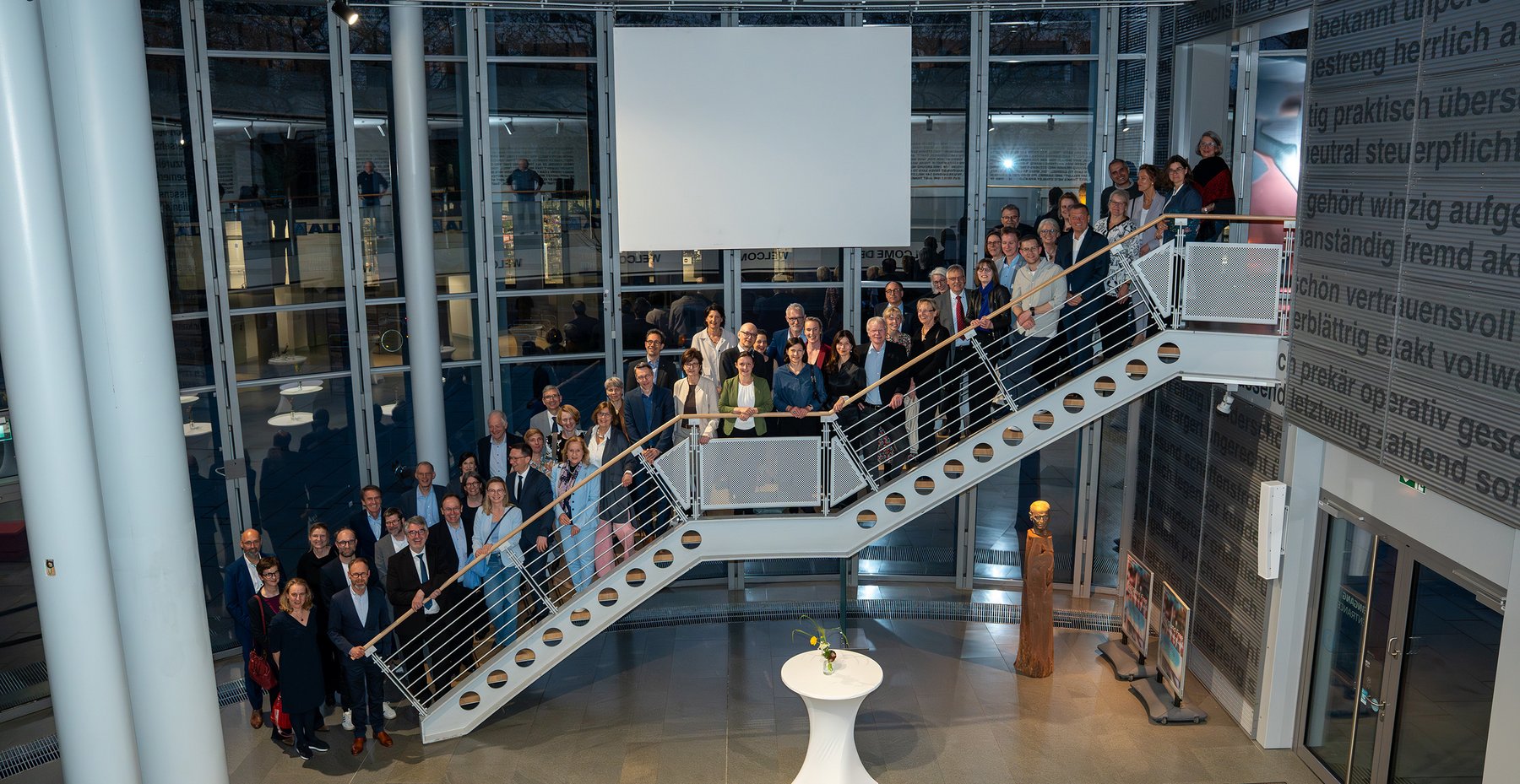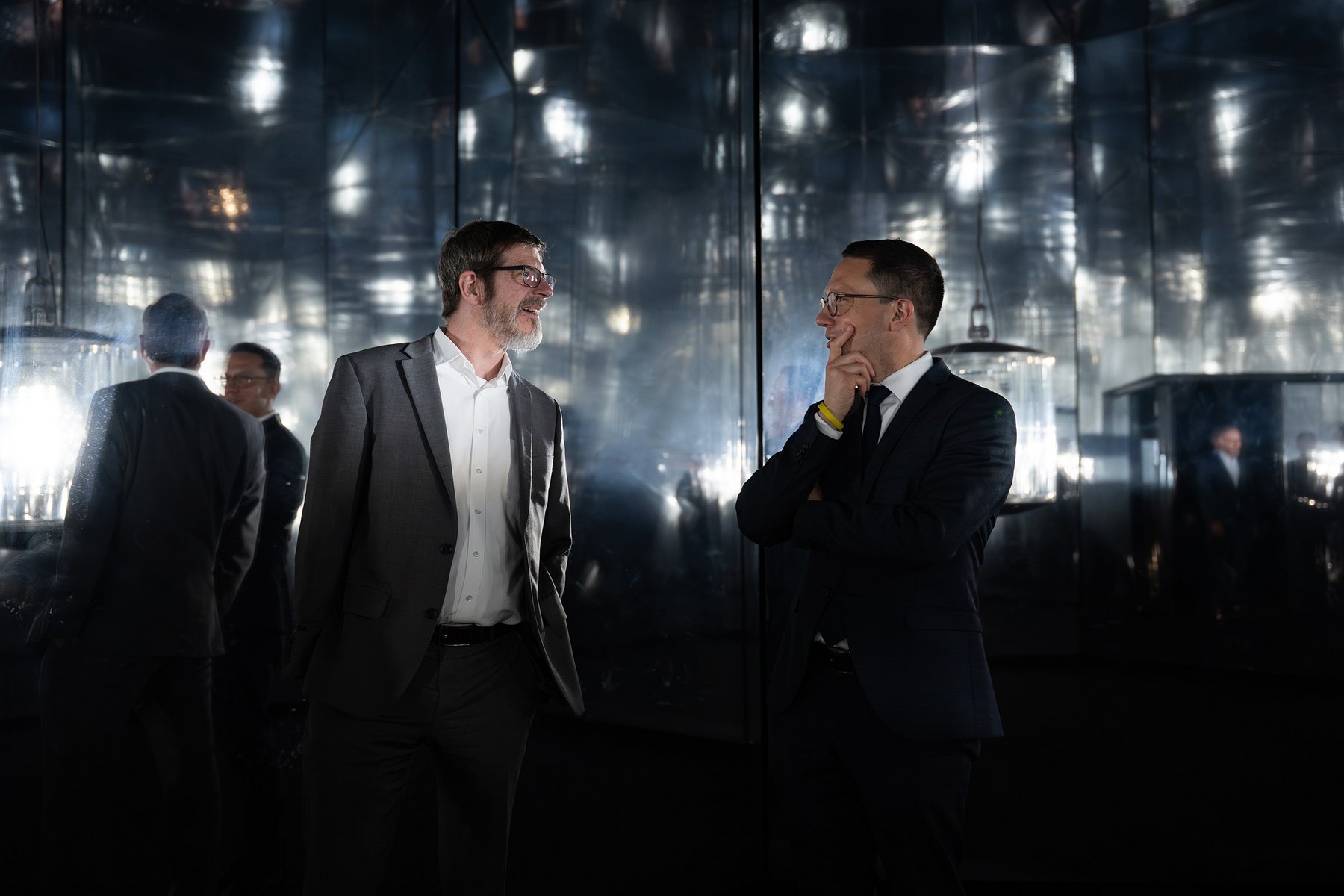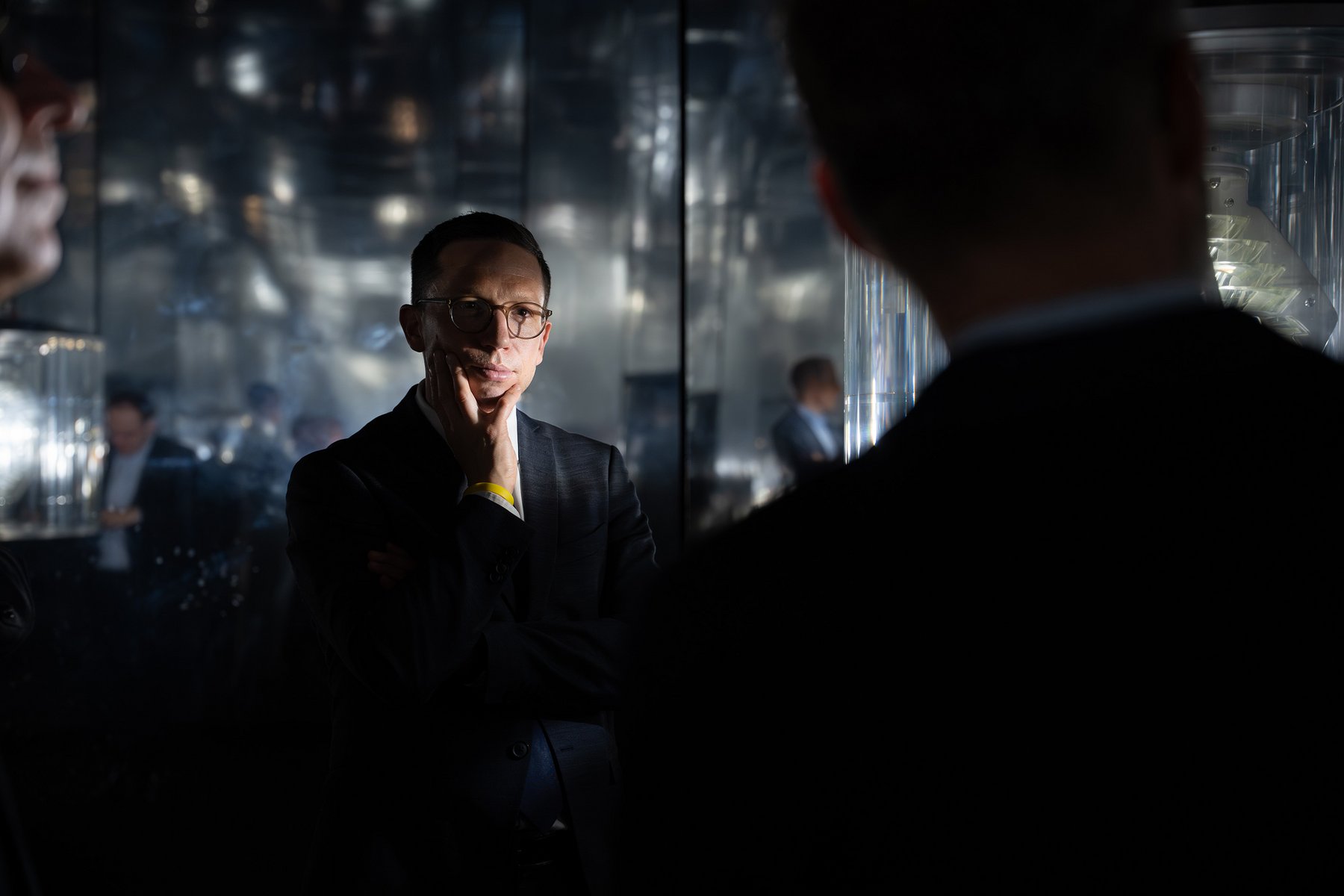

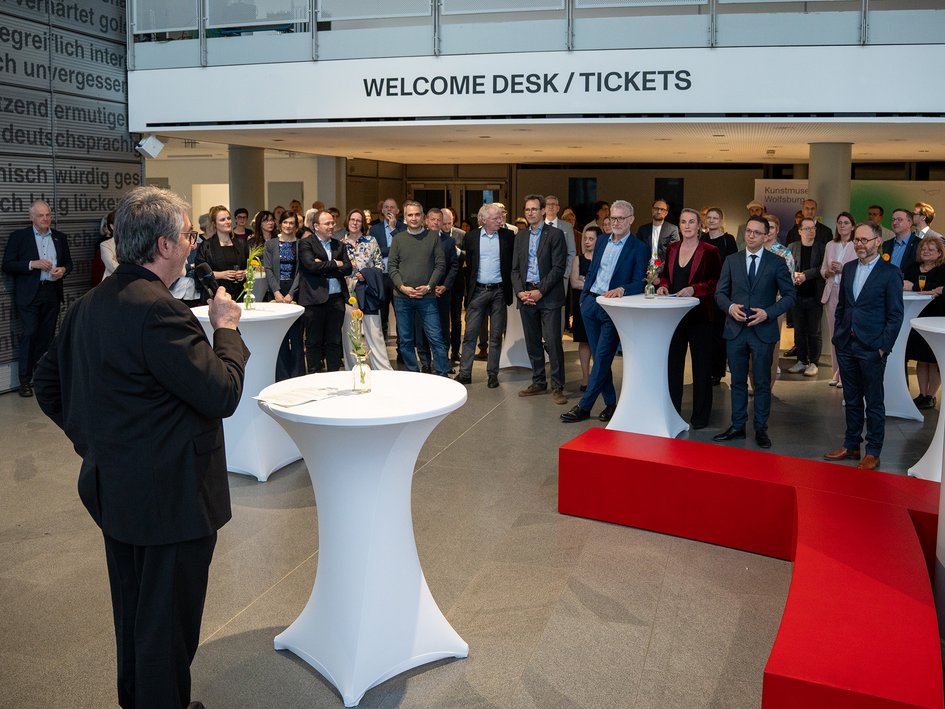
Ostfalia University welcomed representatives of the Science Council (external link, opens in a new window) and other guests from science, politics and society to the art museum on 22 April 2026. The university reception was jointly organised by Ostfalia, the Kunstmuseum Wolfsburg (external link, opens in a new window) and the Lower Saxony Ministry of Science and Culture (external link, opens in a new window). Science Minister Falko Mohrs is a member of the Science Council as Chairman of the Administrative Commission.
Ostfalia Vice President Küch: Transformation is happening here
"I am delighted to welcome you to one of our campus locations in the centre of one of Europe's most economically important and research-intensive regions," said Ostfalia Vice President Volker Küch. In his welcoming address, he referred to the almost 40-year success story of Wolfsburg as a university location, which is closely linked to Volkswagen and the automotive industry. At the same time, Küch emphasised the need for change: "Ostfalia University is a sparring partner for companies, institutions and political players when it comes to shaping transformation. Could there be a better place than Wolfsburg to talk about the future? Because this is where it's happening, where a global corporation, an industry, a city and a region are transforming themselves."
Prof Arlinghaus: Cooperation between science and business needs stable structures
Prof Dr Julia C. Arlinghaus, Chair of the Scientific Commission of the German Council of Science and Humanities, also referred to the ongoing transformation of the automotive industry. The Professor of Logistics & Supply Chain Management at the University of St. Gallen said: "We were very successful with optimisation for a long time. But now we are experiencing disruption, for example with autonomous driving." In the scientific system, it is always possible to develop successful pilots. "But these pilots rarely succeed in scaling up. Interdisciplinary and cross-organisational research projects such as those at the Wolfsburg Open Hybrid Lab Factory (OHLF) show what potential there is."
Arlinghaus formulated three science policy demands in order to bring innovations into widespread application:
- Cooperations with industrial partners should be valued just as much as scientific publications.
- Funding programmes should also be aimed at successful implementation, not just piloting.
- Stable structures must be developed for systematic cooperation between science and industry instead of relying on the networking of individuals.
"Cooperation is not just nice to have, it needs infrastructure," concluded Arlinghaus in her welcome address.
Director of the Kunstmuseum Wolfsburg explains the exhibition
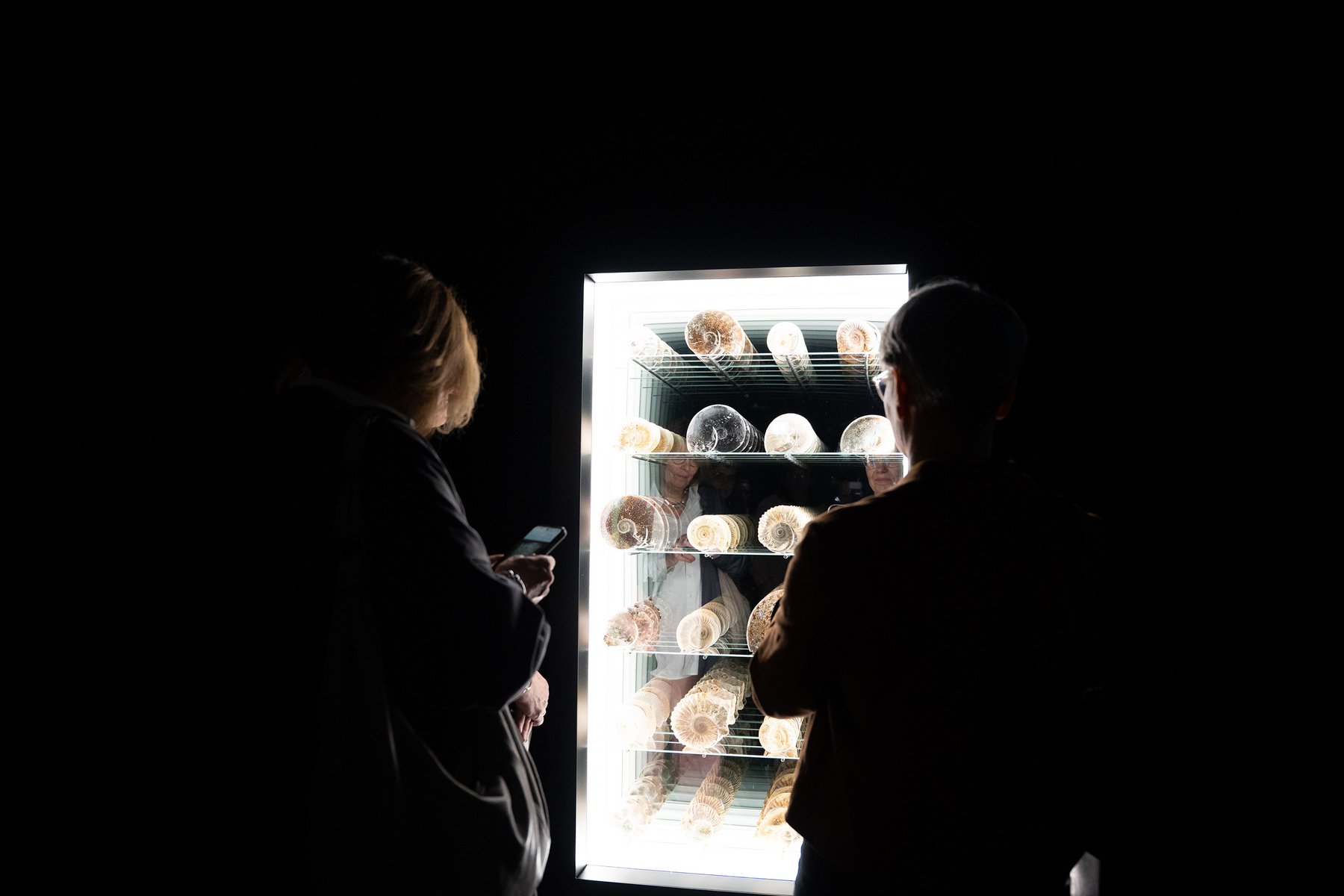
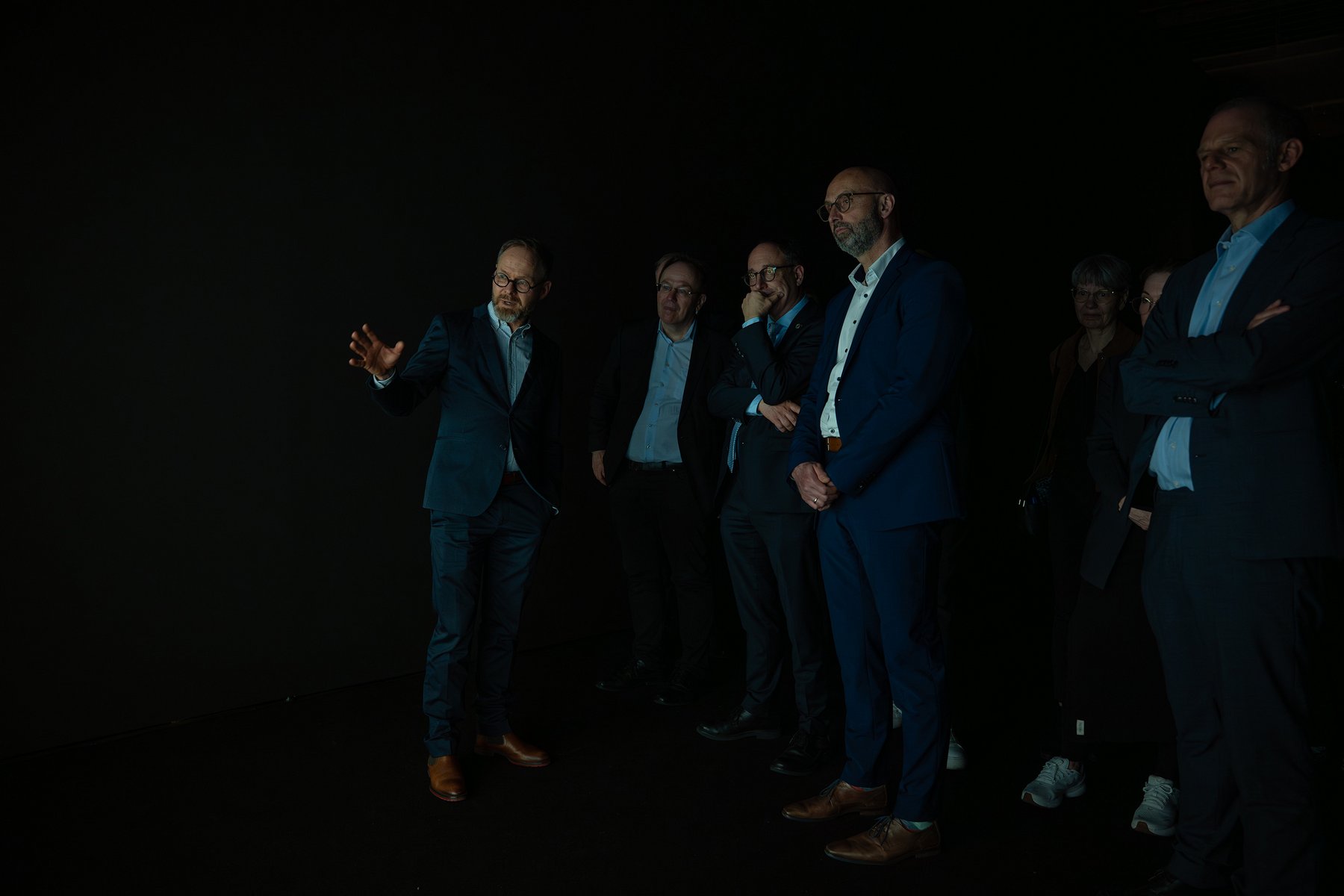
Finally, Dr Andreas Beitin, Director of the Kunstmuseum Wolfsburg, emphasised the importance of the scientific advisory board in the conception of exhibitions. The current show "Midnight Zone" with exhibits by Julian Charrière is an example of this: "Charrière opens up the hidden worlds of the deep sea and raises existential questions about responsibility and future prospects against the backdrop of scientific knowledge." Accompanied by Beitin's impressive explanations, the participants experienced the art museum as a place that enables a change of perspective and opens up spaces for new ideas.