

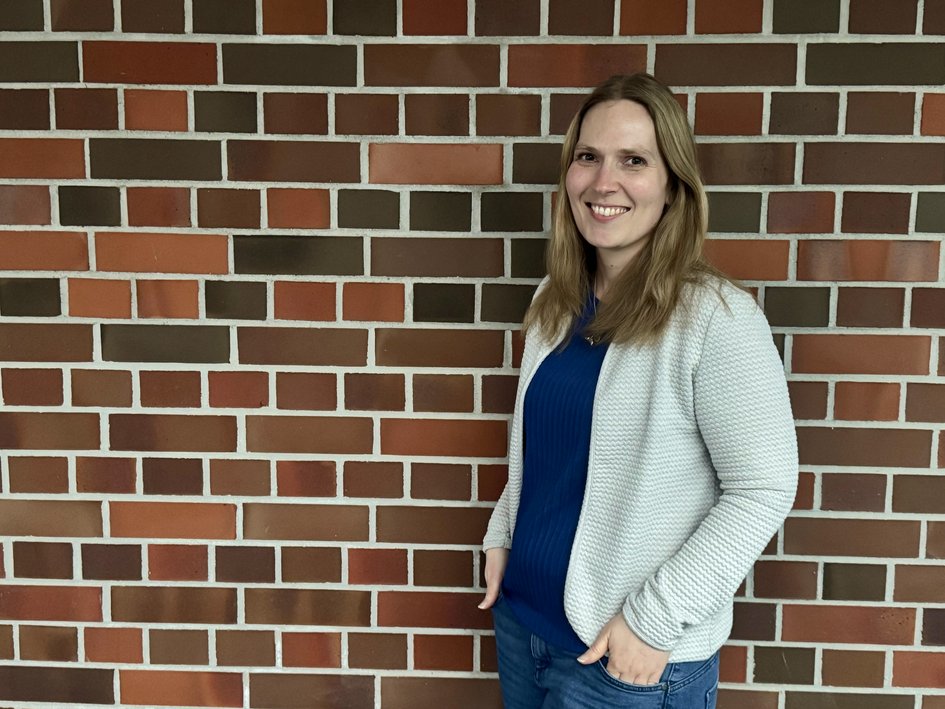
Working and studying in the same place: Jana Kiehne (33) has been an employee at Ostfalia University of Applied Sciences for eleven years and is also studying Urban and Regional Management at the Salzgitter campus. In this interview, she talks about her dual role, study organisation and why it was worth taking the step to study.
Mandy Fleer, Ostfalia editorial team: Jana, what was your path to university?
Jana: My path is a little different to that of many others. I've been working at Ostfalia for eleven years - first in the Student Advisory Service, then at the Faculty of Law and now at the Faculty of Transport, Sports, Tourism and Media in Salzgitter. I worked there for several years before deciding to study at the same time.
What is your job here at Ostfalia?
Jana: I work in the Examinations Office and am closely involved with the Examination Board. I process applications, plan exams and timetables and am also active in committees such as the Faculty Council. University really is a small world of its own and that's exactly what I like about it.
You work almost full-time alongside your studies. How do you manage that?
Jana: Organisation is the be-all and end-all. I started early on to summarise lectures, write study plans and schedule everything. I worked 35 hours in the first two semesters, now it's 32. That doesn't sound like much of a difference, but it makes a big difference. Financially, it was important for me not to cut back too much.
Why did you decide to go back to university despite having a permanent job?
Jana: I missed the career prospects. I realised that if I wanted to stay in the public sector in the long term - and I do - then I needed an academic degree. I had previously completed a business administration degree, but that wasn't enough for the next step. So I made a conscious decision in favour of the degree course.
Did you have any concerns before starting the programme?
Jana: Yes, mainly because of my dual role. I put myself under pressure: What do my colleagues think? Do I have to perform particularly well? In the first semester, I was reluctant to enrol. But that quickly subsided. My cohort was totally open, I never felt "too old" or out of place.
How does the dual role of employee and student work?
Jana: At the beginning, it was difficult to switch - from the office to the lecture and back. At some point I said: I'm a student with my rucksack on and I work without it. This clear separation worked well. I also received a lot of support from colleagues and professors. That made it much easier to get started.
Are there any overlaps between your job and studies?
Jana: To some extent. I was able to recognise a lot from my day-to-day work, especially when it came to administrative law or appeal proceedings. Drawing up administrative decisions and appeals are things that I do every day. That gave me confidence in some modules.
What did you particularly like about the programme?
Jana: The variety. We had business studies, administrative law and political science, but we also drew a development plan and even built a model of a sustainable residential area. I can actually only draw stick figures and suddenly I was planning a residential neighbourhood! That was challenging, but incredibly boosting for my self-confidence.
What tips do you have for prospective students?
Jana : Have the courage. Especially when you start later, you often know more precisely why you are studying. You have a clearer focus than straight after school. Inform yourself well about the course content. Take a look at module handbooks, make contact, maybe even sit in on a lecture. And take the pressure off yourself in the first semester. Arriving is more important than perfection.