

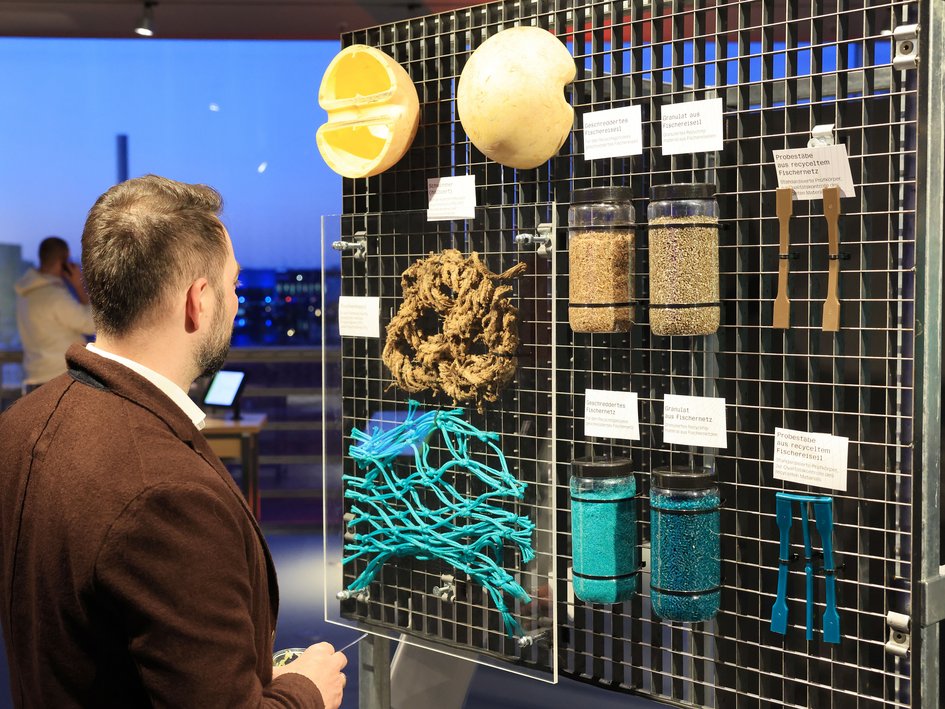
The Phaeno Science Centre in Wolfsburg is dedicating its newly opened forum to the question of how we can make the use of plastic sustainable and circular. Scientific expertise and impetus for the exhibition was provided by the REVFIN project at Ostfalia, which has been researching the recycling of fishing nets for three years in order to prevent ghost nets (lost or abandoned nets) in the oceans.
Establishing a recycling system for fishing nets
Together with partners in Vietnam, REVFIN has set up a recycling system for fishing nets and developed new value chains. This was based on data collected on site. Prof Dr Max Patrick Ehleben, Head of the Institute for Recycling (IFR) at Ostfalia, said at the start of the project: "Vietnam is one of the largest fishing nations in the world. The potential to make a difference here is particularly great."
Some fishing nets now come with a QR code
One effect of REVFIN's research is that a Vietnamese manufacturer is now selling fishing nets designed for recycling that are labelled with a QR code. This means that the origin, age and composition of the nets can be traced at a later date and they can then be recycled in a targeted manner.
The international environmental and recycling project, which combines ecological, economic and social dimensions, is now being presented and brought to life at a multimedia information station in the Phaeno. It shows how a fishing net is recycled, what a ghost net is and what exactly REVFIN does.
"Plastics laboratory of the future" at the weekend
A plastic comet made of 3D-printed elements will also be created, which will grow over the course of the exhibition and is intended to encourage dialogue. At weekends, the "Future Lab Plastics" is also on offer, where visitors can make decorative cards from old fishing nets, among other things.
The cooperation between Ostfalia and the Phaeno (external link, opens in a new window) was made possible by the Volkswagen Foundation (external link, opens in a new window) and is considered a flagship project within the framework of the current funding programme.