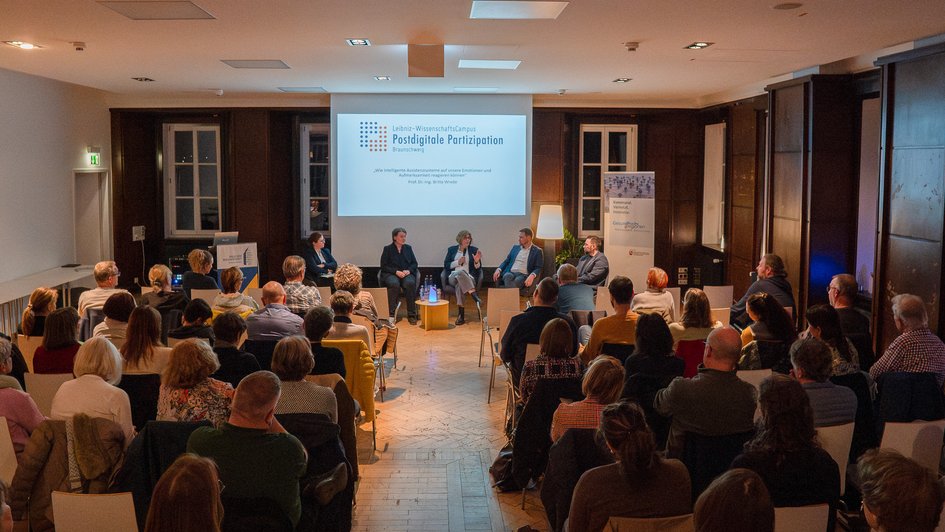

People with intellectual disabilities often face particular challenges in everyday medical practice: Many diagnostic procedures require patients to be able to describe their symptoms precisely. This is precisely where new digital assistance systems come in. For example, they analyse eye movements or physical signals in order to record attention and stress more objectively. The opportunities they offer for diagnostics and participation were the subject of a lecture evening organised by the Leibniz ScienceCampus Postdigital Participation Braunschweig (external link, opens in a new window) and hosted by Prof. Dr Sandra Verena Müller, Dean of the Faculty of Social Work at Ostfalia.
No more free places: topic met with great interest
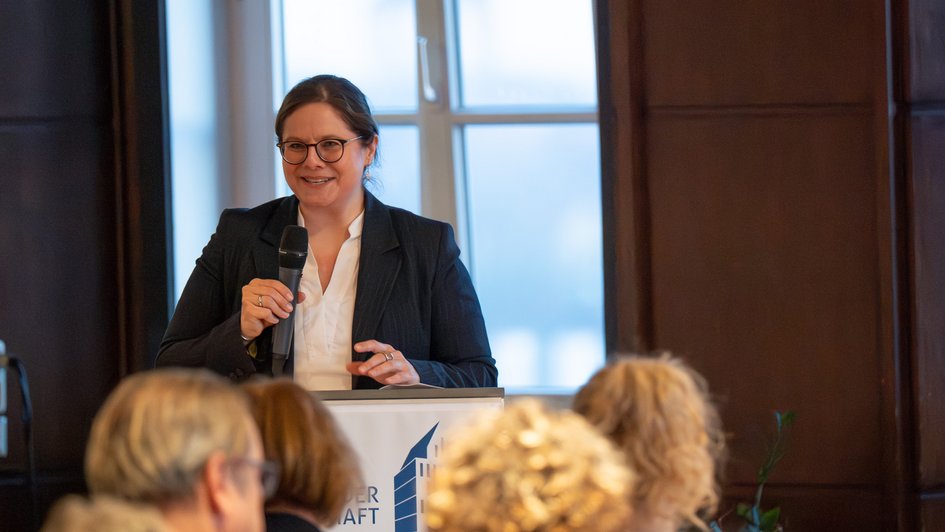
Prof Müller, holder of the Research Professorship for Digitality in Rehabilitation and Participation, then introduced the topic of the event. It was entitled "How intelligent assistance systems can react to our emotions and attention" and met with enormous interest. The hall was filled to capacity.
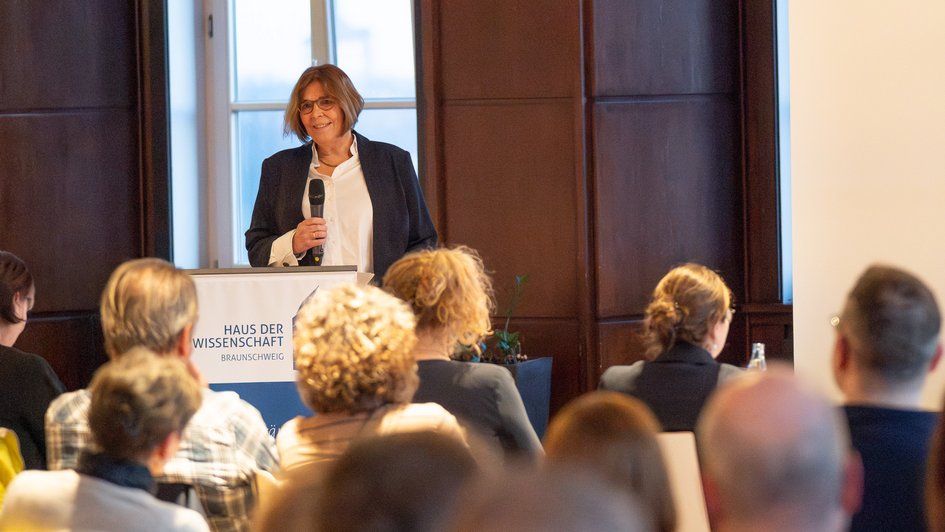
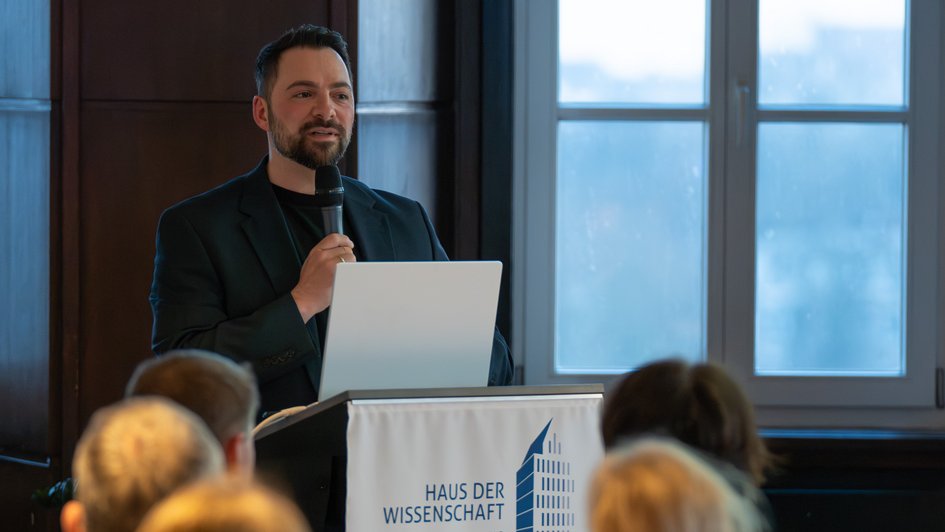
The event was opened on 5 March 2026 by Dr Jeremias Othman, Managing Director of the Haus der Wissenschaft, who welcomed the guests to the early evening atmosphere. In her welcoming address, City Councillor Dr Christina Rentzsch (external link, opens in a new window), Head of the Social, School, Health and Youth Department, emphasised the importance of regional networking. As Chairwoman of the Braunschweig Health Region (external link, opens in a new window), she emphasised the guiding principle of "municipal, networked and innovative" in order to bring technological innovations directly to the people in the region.
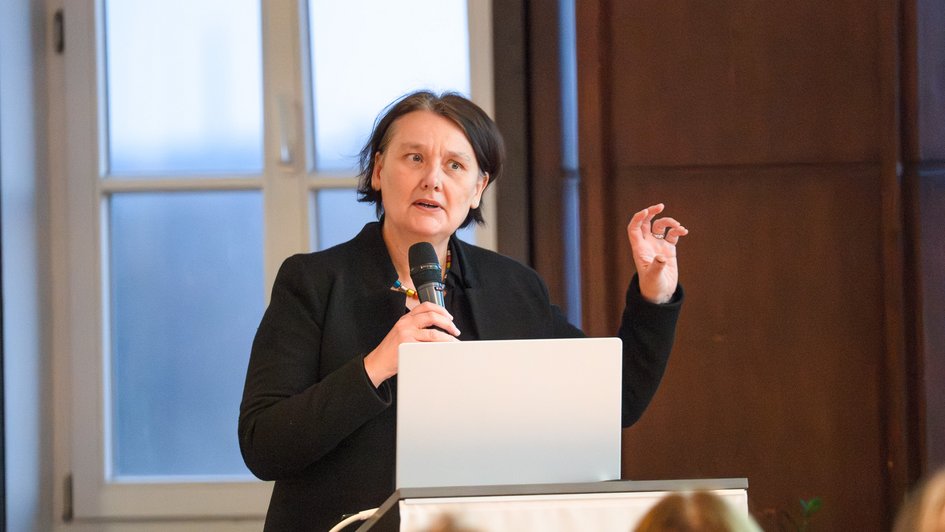
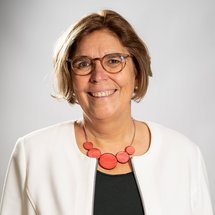
The subsequent specialist lecture by Prof Dr Britta Wrede (external link, opens in a new window) from Bielefeld University offered deep insights into the work of the research department for inclusive medicine. A central problem in today's medical care is the diagnosis of people with intellectual disabilities, as traditional procedures are often based on standardised questionnaires. However, these require a capacity for self-assessment and reflection that is not always present to the necessary extent in this group of people, which can lead to misdiagnosis or overmedication. Prof Wrede presented the GazeAid project (external link, opens in a new window), which takes an objective technical approach. Instead of relying on verbal statements, the system uses eye movement analyses and EEG data to precisely measure attention patterns and thus support an ADHD diagnosis, for example.
Technology recognises whether a person is currently stressed
In addition to diagnosis, the focus is on support in everyday working life, as the IDWorkSupport project (external link, opens in a new window) illustrates. This assistance system helps people with disabilities in workshops to train their concentration during work. Initial test runs in practice have already shown impressive results, although the data also revealed that attention levels can fluctuate measurably over the course of a working week. To make this support as natural as possible, the team uses physical signals such as heart rate and facial expressions, which are recorded by cameras. The technology recognises whether a person is stressed or overwhelmed and adapts the task explanations individually. The aim is to move from a pure data monologue by the machine to a real dialogue in which the AI understands whether its information is actually being received by the other person.
Exciting discussion about ethical boundaries
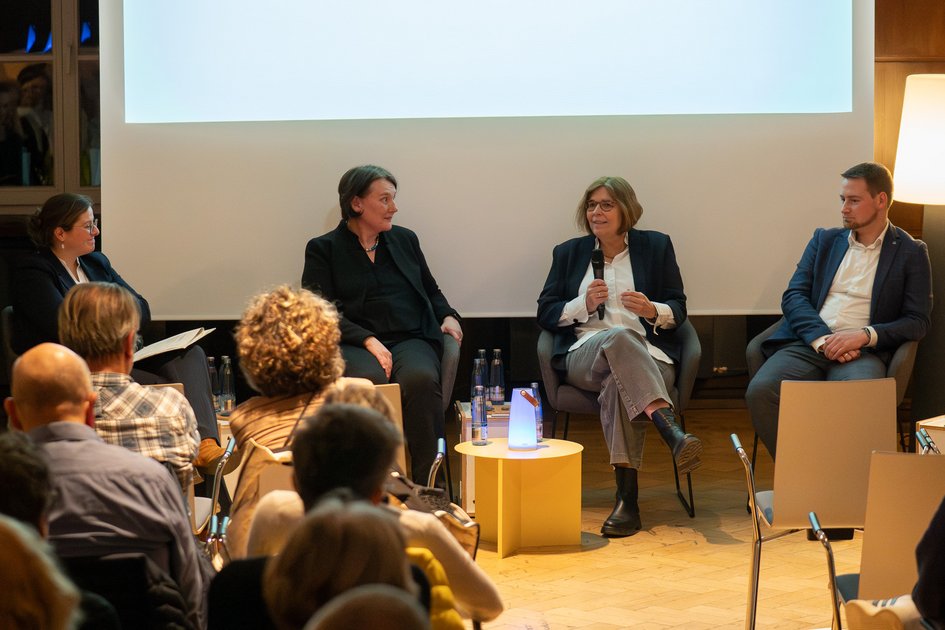
In the subsequent panel discussion, there was an exciting exchange about the ethical limits of technology. Together with Prof Britta Wrede and Prof Sandra Müller, Dr Jonas Schwartze (external link, opens in a new window) from Nibelungen Wohnbau and city councillor Dr Christina Rentzsch discussed smart home technology and the acceptance of sensors in private homes, among other topics. Another question that was discussed was what tasks machines should take on in the future and where the limits of automation lie. Prof Wrede dampened expectations of robots taking over complex everyday activities quickly and comprehensively, as many of these systems are still in their infancy technologically and are associated with high costs.
Instead, she argued in favour of a path in which intelligent assistance systems support humans primarily in cognitive processes such as analysis and diagnosis. In this way, humans remain responsible for those activities that are difficult to map technologically in the foreseeable future. In doing so, she also responded to a critical objection from the audience as to why technological innovations often start precisely where people already have great strengths, instead of simply taking over burdensome tasks. The experts agreed that the human component and professional judgement must continue to take centre stage, as experienced professionals form an important and necessary corrective authority for AI.
The evening concluded with a lively discussion over drinks and snacks, during which many participants took the opportunity to further discuss the concepts presented in the lecture.