
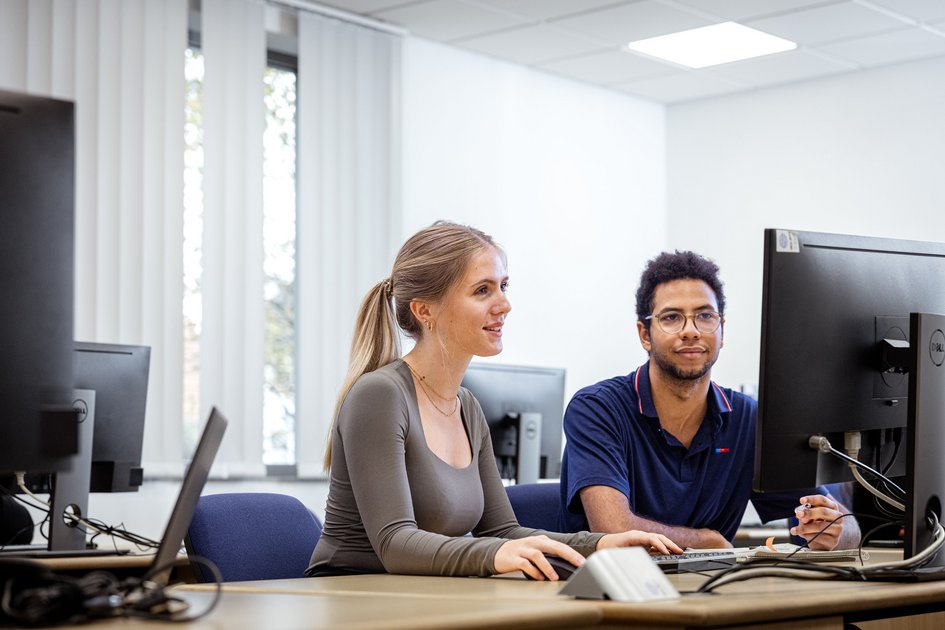
How is knowledge created and what value does it have beyond your studies? In the compulsory elective subject "Wikipedia, Wikis, Knowledge Management" at the Faculty of Computer Science on the Ostfalia campus in Wolfenbüttel, students are investigating precisely this question. Instead of traditional term papers, they write or revise articles for Wikipedia and thus make a visible contribution to free knowledge.
Learning through co-creation
The course initiated by Prof Dr Peter Riegler takes an innovative approach: students are transformed from passive users of Wikipedia into active authors. The students choose their own topics - from computer science and pop culture to regional content. This results in a wide variety of topics: articles such as Alligator Alcatraz, SpaceX Crew-11 or the Fadenschein puppet theatre were newly created or fundamentally revised as part of the course.
Visible results with an impact
The difference to traditional exam results is clearly noticeable: the content created does not disappear in a drawer, but is publicly accessible and is actually used. Individual articles receive numerous views every day, even several thousand at peak times. Two articles from the course were even highlighted on the main Wikipedia page under the heading "Did you know?". This is a special honour within the community.
"It's hugely motivating," reports computer science student Jacobo Coxall. "You're not just writing for a rating, but for the world. The knowledge remains and can be used by others."
New skills in the degree programme
In addition to writing itself, students acquire important key skills. These include, in particular, research skills, the critical handling of sources and the formulation of neutral, verifiable statements. "You have to check exactly which sources you are allowed to use and how to substantiate statements. It's challenging, but you learn an incredible amount in the process," says Coxall.
Free knowledge as a social task
In addition to the technical learning objectives, the project also has a social dimension. Free, accessible knowledge is under increasing pressure - both politically and technologically. "As universities, we cannot escape this development," emphasises Riegler. "We should create spaces in which students learn to critically reflect on knowledge and actively shape it." The course therefore also sees itself as a contribution to promoting media skills, a culture of discussion and social responsibility.
A model for the future
The course was supported by the Wiki Education Foundation and is part of a larger initiative to strengthen university teaching in Wikipedia. It serves as a pilot project and is also attracting interest from other universities.
For many students, the experience is a lasting one: some continue to work on Wikipedia articles after the course or start their own projects. "Once you realise that a topic is not yet well explained, you quickly think: I can improve that," says Jacobo Coxall.
The Wikipedia course at Ostfalia shows how teaching can be made practical, socially relevant and sustainable. Students not only acquire specialist skills, but also create real added value for the public and for themselves.