

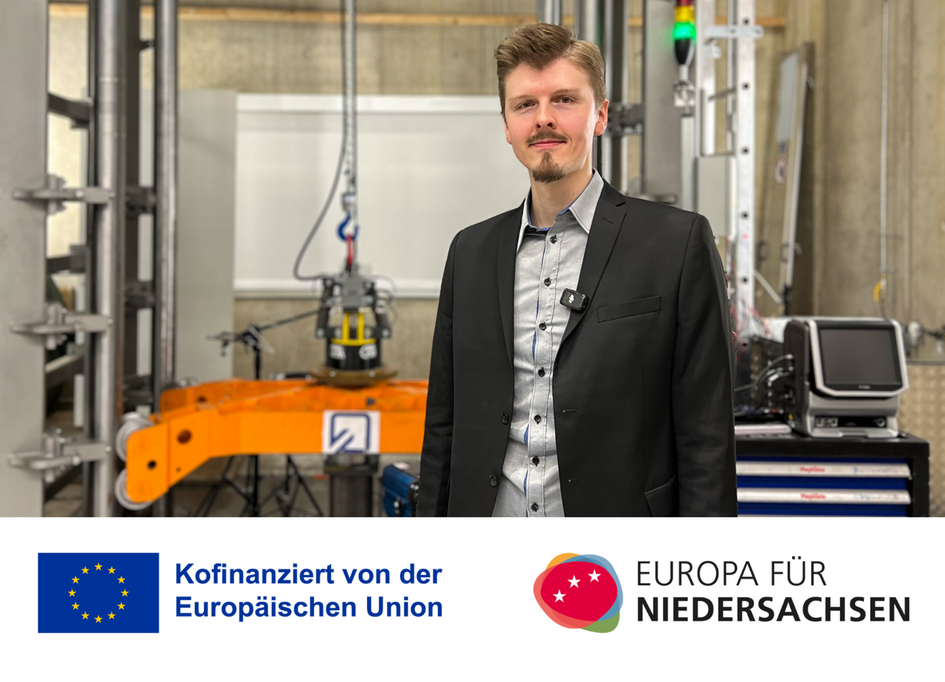
Lightweight materials, smart designs plus AI: the AeroKISS research project aims to develop new approaches for safe and sustainable aircraft structures. Since February 2026, researchers at Ostfalia have been working on creating an AI-based development method for energy absorption elements that protect occupants and energy storage systems in aircraft with alternative propulsion systems.
Composite materials made from natural fibres are used
The focus is on components that absorb energy in the event of loads or accidents and thus protect occupants and technology - particularly important for electric aircraft, which make aviation ecologically cleaner. AeroKISS relies on modern composite materials made from natural fibres, which are lighter, more resource-efficient and easier to recycle, while at the same time meeting high requirements in terms of fire resistance, operational stability and energy absorption.
A modular construction kit approach is being pursued during development. This allows energy absorption systems to be efficiently designed for different aircraft variants with different weights and dimensions. AI-supported models help to predict the force and failure behaviour of the structures and significantly accelerate development processes - especially in the design of small aircraft with alternative propulsion systems.
Collaboration with partners from research and industry
The project is headed by Professor Harald Bachem, Faculty of Automotive Engineering, and is being implemented in close collaboration with partners from research and industry. The project partners include M&D Flugzeugbau GmbH & Co KG, Altair Engineering GmbH, CTC GmbH, Forschungsflughafen Braunschweig GmbH, Innovationsagentur Nordostniedersachsen INNO.NON GmbH, Open Hybrid LabFactory e.V. as well as the VDI Braunschweig District Association and the VDI State Association of Lower Saxony.
Prof Bachem: "AeroKISS is a clear signal for the future of aviation: we are not only developing safer aircraft, but also more sustainable, intelligent structures that significantly reduce the ecological footprint of aviation. By combining AI, natural fibres and cross-industry collaboration, we are creating a blueprint for future innovations - not only in Lower Saxony, but for the whole of Europe."
The collaboration between the aviation and automotive industries is intended to transfer knowledge in a targeted manner and further strengthen regional innovation in Lower Saxony. The project will run until January 2028 and is funded with approximately 360,000 euros from the European Regional Development Fund (ERDF) and the state of Lower Saxony. The aim is to develop safe and sustainable aircraft structures and thus make a contribution to lower-emission aviation.