

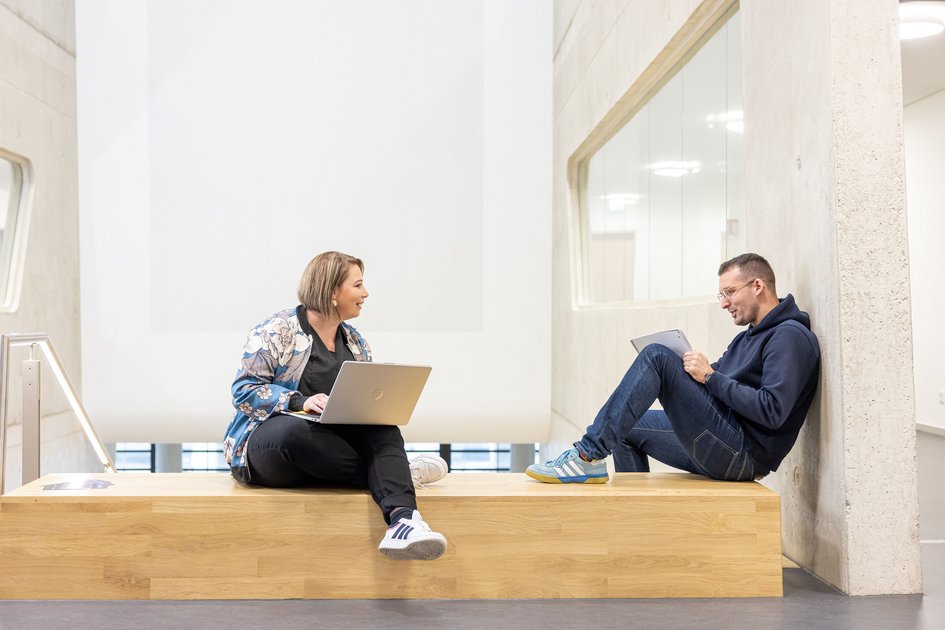
A part-time degree programme offers the opportunity to gain further professional qualifications without giving up your job. Many prospective students ask themselves similar questions before starting their studies: What are the costs involved? How much time will it take? Is it possible to study online? How are the exams organised? And what support is available?
Ostfalia offers part-time Bachelor’s and Master’s degree programmes, as well as certificates, seminars, micro-degrees and the option to enrol as an auditor. The structure of the programmes, the proportion of face-to-face teaching, the examination formats and the time commitment vary depending on the programme.
How much does a part-time degree programme cost?
The cost of a part-time degree programme depends on the specific continuing education programme. Whilst part-time Bachelor’s programmes are subject to the standard semester fee, continuing education Master’s programmes have their own fee structures. Different fees also apply for certificates, seminars, micro-degrees and guest student status. It’s best to take a look at the pages for the continuing education programmes that interest you. The details of the costs are always listed there.
Good to know: Depending on the company, employers may cover some of the costs of part-time continuing education.
How much time does a part-time degree programme require?
It’s not possible to give a general estimate of the time commitment required for a part-time degree programme. It depends on the type of programme and the number of modules you’re taking. A part-time Bachelor’s or Master’s degree programme runs for several semesters and consists of lectures, self-study periods and exams. Certificates, seminars and micro-degrees are much more compact in structure and focus on specific subject areas.
Good to know: Many degree programmes offer flexible study options. You can decide for yourself how many modules you want to take each semester. This makes it easy to tailor your studies to your work situation.
Can I also study online whilst working?
At Ostfalia, it is possible to study online. Many part-time degree programmes can be completed largely from any location. Depending on the programme, modules may take place almost entirely online or as blended learning (a combination of online and face-to-face elements). This combines digital modules with individual face-to-face sessions. Some seminars or practice-oriented further education courses, on the other hand, deliberately place greater emphasis on face-to-face sessions.
Good to know: In the overview of further education courses, you can filter specifically for online and blended learning options.
How are exams conducted on a part-time degree programme?
The types of assessment vary depending on the degree programme and module. In addition to traditional written exams, assessments may include, for example, essays, project work, presentations, portfolios or oral exams. In many online degree programmes, written exams still take place in person, whilst other assessments can also be completed digitally or throughout the semester.
Good to know: Exam dates are announced well in advance – so you can plan your work and studies effectively.
Will my employer support me whilst I’m studying part-time?
Many employers support staff who are undertaking further education whilst working, as they also benefit from the knowledge gained. Possible forms of support include: financial grants, time off for exams or face-to-face sessions, flexible working hours, and the option to work remotely or from home. The exact options available depend on the company.
Good to know: Having an early discussion with your line manager or the HR department will help you agree on the specific forms of support.
Where can I get support whilst studying?
At Ostfalia, there are various points of contact to support you during your studies. Programme coordinators can help you with organisational matters, whilst lecturers can assist with subject-specific queries. Learning coaches offer advice on topics such as time management and self-management, exam anxiety and stress, as well as developing effective study habits.
Good to know: All of Ostfalia’s support services are listed under ‘Advice & Help ’.
I’d like to study whilst working. How do I find the right programme?
Whether it’s a Bachelor’s, Master’s, certificate, seminar, micro-degree or guest student programme – which further education format suits you best depends on your career goals and existing qualifications. If you’re aiming for an academic qualification, Bachelor’s or Master’s degree programmes are worth considering. If you’d like to gain further qualifications in a specific subject area, certificates, seminars, micro-degrees or guest student status may be the right choice for you.
Good to know: The Central Student Advisory Service will help you, through a personal consultation, to find the further education programme that best suits your professional and personal circumstances.
An overview of all degree programmes and further education courses at Ostfalia is available on the ‘Part-time degree programmes’ and ‘Further education’pages .