

Social Work Online
Are you working, want to develop your skills, take on social responsibility and are looking for a flexible, practical online degree programme?
Social work online is just right for you. You study independently in the Moodle learning environment, while the weekly live online courses in the evening allow you to interact directly with students and lecturers - you can access the recordings at any time.
Three to four voluntary attendance days per semester in Suderburg offer personal exchange, practical impulses and the chance to expand your network. This allows you to seamlessly integrate your studies into your career and family life and supports you in realising your social vision.
Facts at a glance
Think globally. Study locally.
Best opportunities. Choose social work at the Suderburg campus!
To the application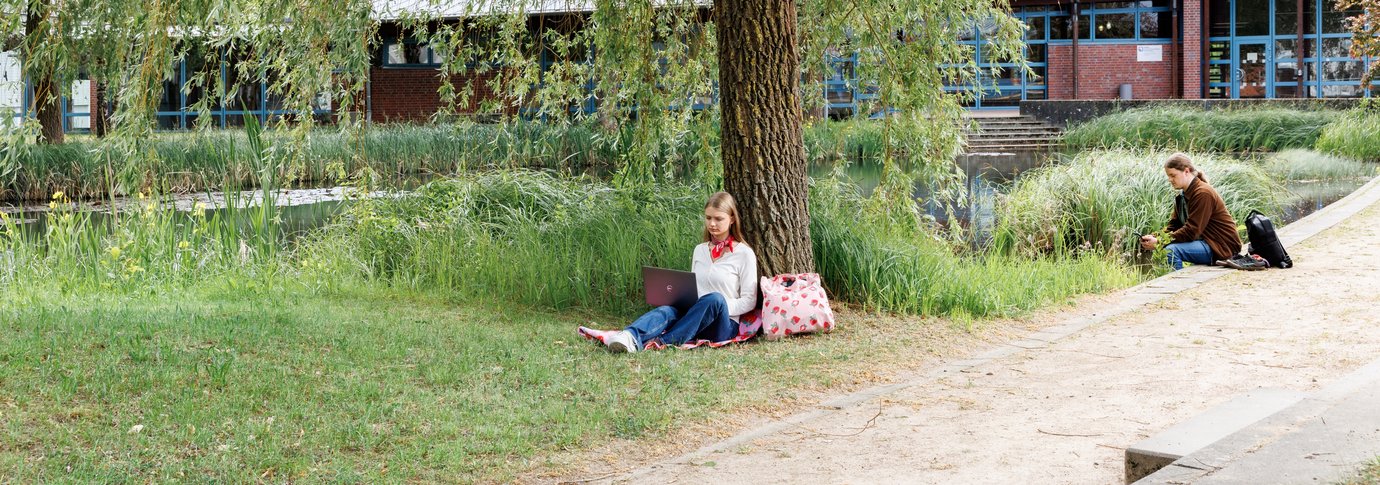
Details of the degree programme
Fields of activity
Fields of activity
With a degree in Social Work at the Ostfalia Campus in Suderburg, you will have access to numerous exciting fields of work in which you can actively improve people's lives and help shape social change:
- Municipal social and educational work
- Daycare centre and school social work
- Working with people with disabilities
- Family counselling
- Addiction counselling
- Migration and integration work
- Street work
- Work in public service offices (e.g. youth welfare office, social welfare office)
- Work in clinics and social psychiatric services
- Child and youth welfare
You can find out more about what our graduates do after completing their studies further down on this page: Career prospects
Programme content
Programme content
You will learn the key skills needed to work professionally and responsibly in social work. The degree programme combines a scientific foundation with practical application. You will deepen your knowledge in the following areas:
- The professional counselling and support of people in crisis and stressful situations
- The application of legal frameworks and ethical principles in daily practice
- Methods of social research and (empirical) analysis of social structures and life situations
- Reflective further development of your own actions as a social worker
The course content is geared towards current social challenges - both in rural regions and in urban centres. Two specialisations are particularly in demand:
"Intervention and counselling"
Supporting people with mental illness, addiction problems, disabilities or traumatic experiences - with a focus on crisis intervention, counselling and long-term support.
"Education and prevention"
Work in early childhood, in child and youth welfare, in schools and in family counselling - with the aim of reducing social inequalities and promoting educational processes.
The detailed content of the individual modules and the semester structure can be found in the study modules section.
Credits
Contact person Credits
Prof. Dr. Susanne Schlabs
stv. StDin, Faculty of Trade and Social Work
Building C, Room 109.2, Suderburg
Professur für Sozialarbeitswissenschaft

Crediting of services already rendered
Do you already have previous experience?
You don't have to relearn everything you already know. If your previous achievements match the content and scope of our modules, you can have them recognised. This saves you time and effort.
What can be recognised?
- Former studies: achievements that you have already completed at another university.
- Vocational training & experience: Your practical training (e.g. as an educator) together with professional experience in the social sector.
- Further training: Certificates, specialist degrees or other further training.
How does it work?
We check whether your previous experience matches our modules. If this is the case, they will be recognised as coursework and you no longer have to take the relevant module.
Let us advise you individually!
Every CV is unique. We will look together at what you can have recognised. Please contact us for personal advice:
Online study programme - flexible, digital and practical
Online study programme - flexible, digital and practical
Are you wondering what an online degree programme with attendance phases really looks like? Here you get a clear overview of your study life - with digital tools, personal contacts and structured schedules that give you flexibility and security.
Your degree programme begins with an introductory event on the start day, where you will receive all the important information about the course, the learning platform and the contact persons.
Digital learning worlds at a glance:
- Each module has its own Moodle course, where you will find all learning materials, assignments, deadlines and documents.
- Web lectures take place in the evenings - so you can also study while working. All sessions are recorded and can be caught up on at any time. You decide for yourself when you take part.
- You submitpapers and assignments online via Moodle. Presentations are held via web conference - very easy and without travelling.
Attendance phases - personal, practical, valuable:
- You come to the Suderburg campus 3 to 4 times per semester for block dates (Friday & Saturday) - for intensive seminars, case discussions, group work and personal exchange with lecturers and fellow students.
- You will write your exams on site, also at the weekends.
- Attendance is voluntary but highly recommended - it strengthens your network and your understanding.
Planning right from the start:
- To give you the best overview and planning security, all dates are provided before the module assignment - i.e. at the beginning of each semester:
→ The weekly timetable with web conferences and attendance dates
→ The examination schedule with all exam dates
Both schedules are completely transparent and are available to you at an early stage - so you can optimally coordinate your studies, career and private life.
Support that fits:
- You have individual student support from a central contact person who will accompany you throughout your studies - from enrolment to graduation.
- In each Moodle course you will find the contact details of the responsible teaching staff - you can ask questions at any time by message or in the web lectures.
- You can easily make contact with fellow students via the Moodle groups and discussion forums.
Study flexibly - at your own pace:
- The degree programme is part-time and can be adapted to your everyday working life. The duration depends on the number of credits per semester.
- In a regular degree programme, the modules are spread over 7 semesters - so you have enough time to combine theory and practice.
- All learning materials are available online - anytime, anywhere, on all devices.
Important information on the examination process:
- Term papers and presentations and other examinations during the semester can be cancelled until the topic is issued or at a specified early date in the semester.
- Written examinations can be cancelled up to one day before the examination date.
Practical work experience - a real advantage:
- Your degree programme is enriched by your professional activity, allowing you to learn directly from your practice - and apply your knowledge to the course content.
All modules and their semester-specific content can be found in the study modules section - there you can find out exactly what to expect in each semester.
Practical phase and state recognition
Your path to state recognition - integrated directly into your degree programme!
With us, you can complete your Bachelor's degree including state recognition. What's special: The practical phase required for this is integrated directly into your degree programme! It comprises 30 CP and can be completed in parallel over three semesters.
Your advantage: If you are already working in a suitable field, you can simply continue working there and use your professional activity as a practical phase.
The accompanying courses mainly take place online and in person on Fridays and Saturdays. After successfully completing the programme, you will receive state recognition and be able to use the professional title of "social pedagogue" or "social worker".
After the Bachelor
After the Bachelor
With your Bachelor's degree and state recognition, you are ready to start your career or continue your professional development. Ostfalia offers various Master's degree programmes that build on your Bachelor's degree in Social Work. Find out more here:
Master's programmes at the Ostfalia
1. Semester
Fundamentals of social work sciences (1. Semester) Teaching of fundamental aspects of social work science, including a central introduction to the discipline and profession, definition of the subject of social work, discussion of methods in social work and fields of action in social work.
Teaching of fundamental aspects of social work science, including a central introduction to the discipline and profession, definition of the subject of social work, discussion of methods in social work and fields of action in social work.
Human scientific basics (1. Semester) Descriptions and explanations of human behaviour and experience in a social context are taught within the general framework of a bio-psycho-social model of human development. The focus is on teaching basic (social) psychological concepts (learning, thinking/problem solving, motivation, emotion, personality, attitude, communication/interaction) that are relevant to the planning and implementation of social work tasks. Students acquire the basics for understanding and modifying human communication and behavioural structures for different fields of action and activities in social work.
Descriptions and explanations of human behaviour and experience in a social context are taught within the general framework of a bio-psycho-social model of human development. The focus is on teaching basic (social) psychological concepts (learning, thinking/problem solving, motivation, emotion, personality, attitude, communication/interaction) that are relevant to the planning and implementation of social work tasks. Students acquire the basics for understanding and modifying human communication and behavioural structures for different fields of action and activities in social work.
Social science basics (1. Semester) The module offers an introductory approach to the basic concepts and findings of the disciplines of sociology and educational science. These provide reference knowledge and forms of knowledge acquisition for scientifically systematised social work. The module provides basic systematic knowledge to explain and understand social processes and social structures, particularly with regard to socialisation conditions, social inequalities and risks of exclusion.
The module offers an introductory approach to the basic concepts and findings of the disciplines of sociology and educational science. These provide reference knowledge and forms of knowledge acquisition for scientifically systematised social work. The module provides basic systematic knowledge to explain and understand social processes and social structures, particularly with regard to socialisation conditions, social inequalities and risks of exclusion.
History and structures of social work (1. Semester) It deals with theoretical, ideological, social and institutional-historical aspects of the development of welfare and youth care, social work and social pedagogy - social work, the development of social work as a context of interpretation and action, the principle of subsidiarity, political, organisational and institutional structures of current social work.
It deals with theoretical, ideological, social and institutional-historical aspects of the development of welfare and youth care, social work and social pedagogy - social work, the development of social work as a context of interpretation and action, the principle of subsidiarity, political, organisational and institutional structures of current social work.
Law I (1. Semester) The ability of social workers to act requires knowledge of the legal framework across all fields of action. Students acquire basic knowledge in the areas of law relevant to the theory and practice of social work, in particular social and welfare law. They learn to recognise the structural framework of social work and to assess the significance of law and legislation in the conception of professional assistance.
The ability of social workers to act requires knowledge of the legal framework across all fields of action. Students acquire basic knowledge in the areas of law relevant to the theory and practice of social work, in particular social and welfare law. They learn to recognise the structural framework of social work and to assess the significance of law and legislation in the conception of professional assistance.
Scientific work (1. Semester) The students deal with competence assessment alpha levels, catalogues, bibliographies, research techniques, tools and strategies (truncation, masking, thesaurus etc.) as well as reading techniques that promote learning (excerpts, summaries, synopses) in order to enable them to work academically.
The students deal with competence assessment alpha levels, catalogues, bibliographies, research techniques, tools and strategies (truncation, masking, thesaurus etc.) as well as reading techniques that promote learning (excerpts, summaries, synopses) in order to enable them to work academically.
Career prospects
Let our graduates take you directly into their everyday working lives - in short videos they show how they apply their knowledge from their social work studies in Suderburg, whether in outpatient youth welfare, offender support, school social work or networking.

Study modules
- 1.to 3rd semester: Fundamentals and fields of action of social work
- 4.to 6th semester: in-depth study, practical phase, theory/empirical project and compulsory elective modules
- 7. 2nd semester: in-depth module, follow-up practical phase, practical project and Bachelor's thesis
Location advantages Campus Suderburg
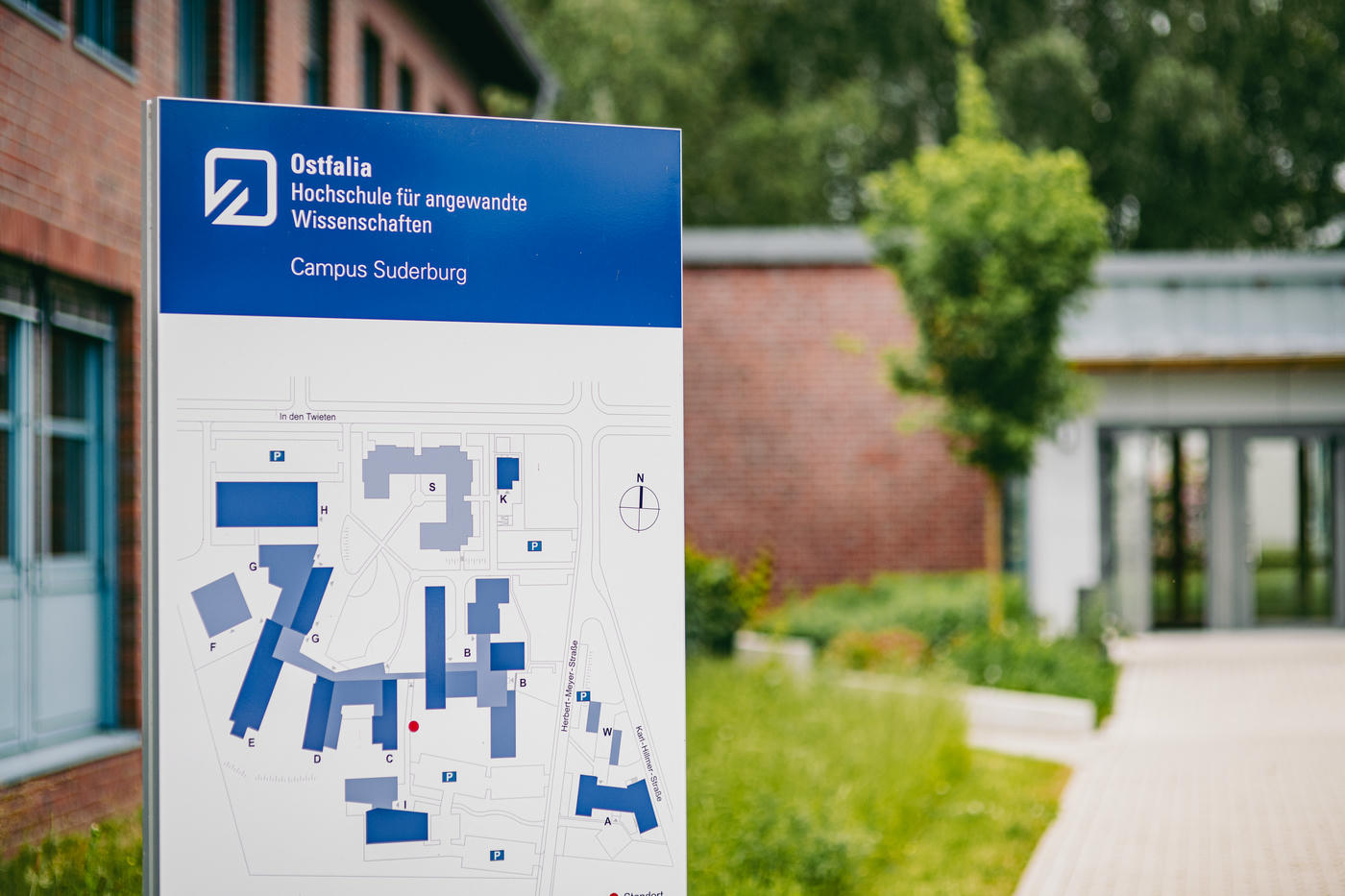


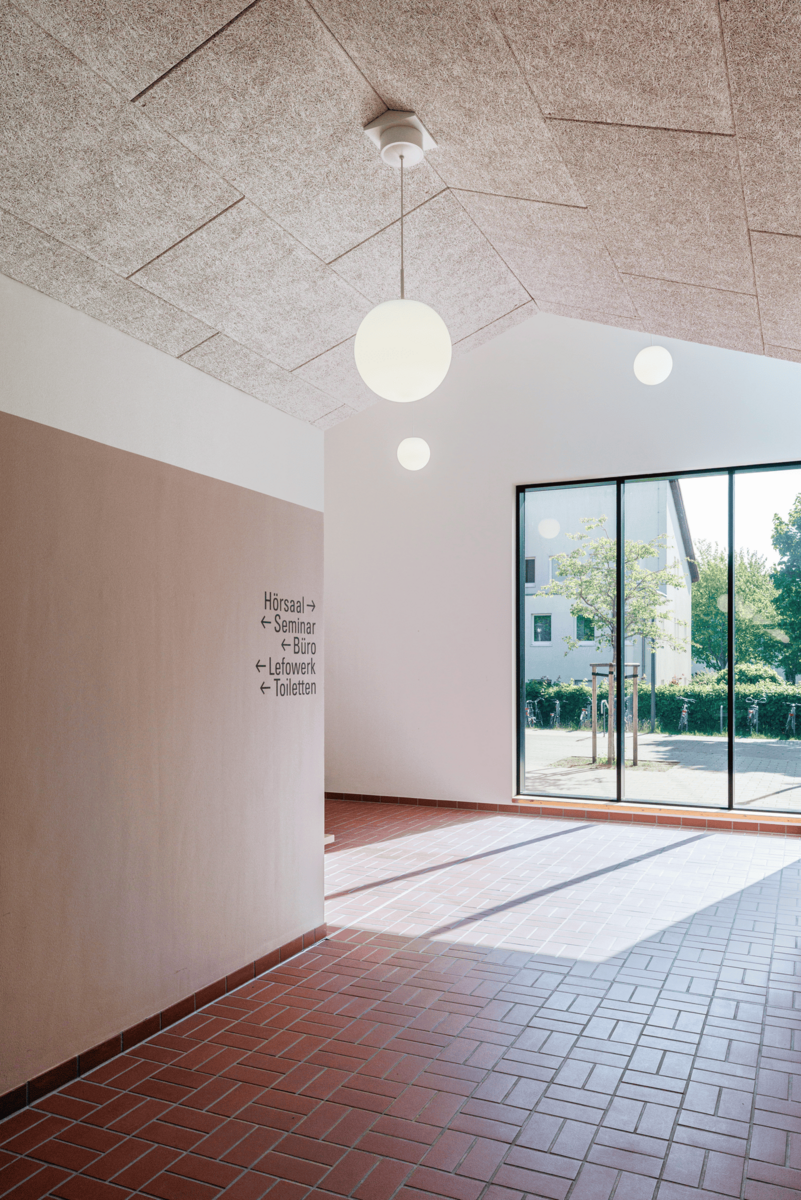

+ Modern equipment
+ Small groups
+ Intensive support
+ Familiar contact
+ Short distances
+ Active student life with parties, cinema, sports
+ Favourable living space
+ Lots of nature
+ Quickly in Hamburg or Hanover with the semester ticket and the train
Useful links and files
Do you still have questions?
Our Central Student Advisory Service (ZSB) will be happy to support you!
Building Am Exer 45, Room 003, 004 and 101 to 105
availability by phone:
Monday, Tuesday and Wednesday: 9:00 AM - 3:30 PM
Thursday: 1:00 PM - 3:30 PM
Friday and before holidays: 9:00 AM - 12:00 PM