

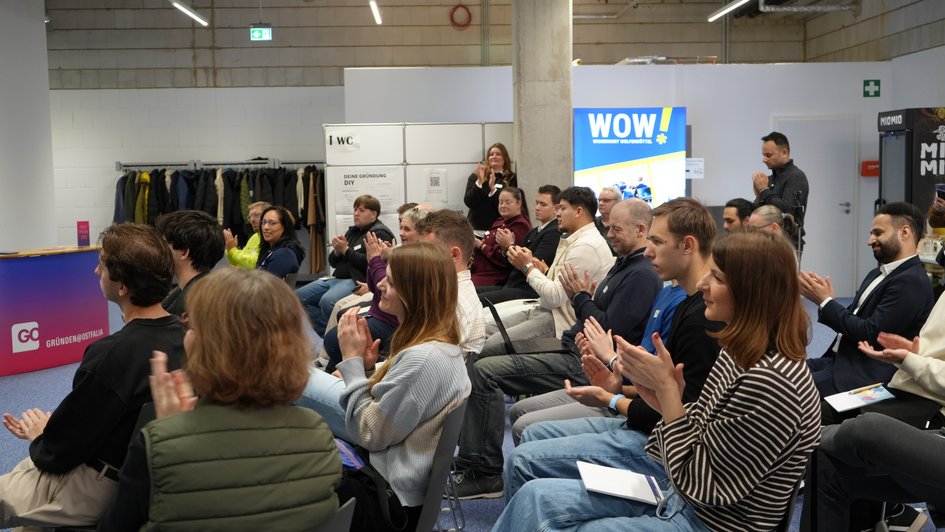
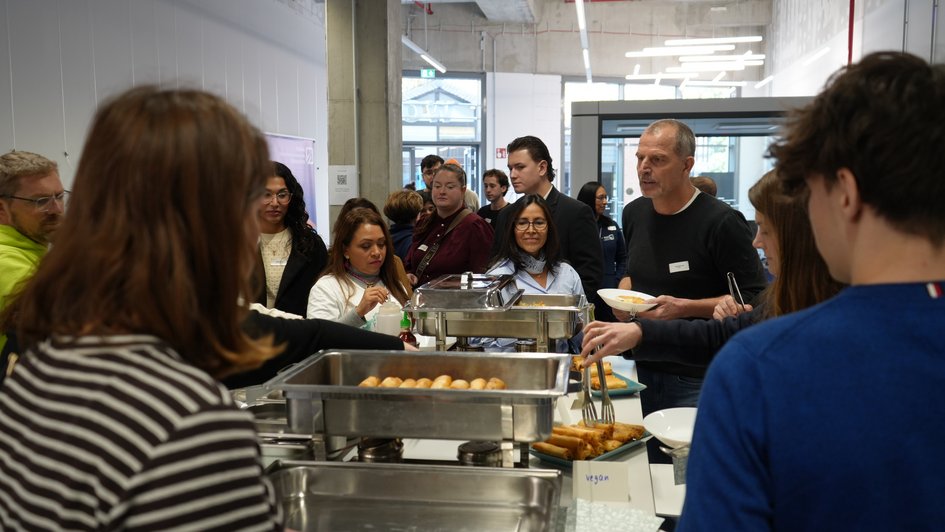
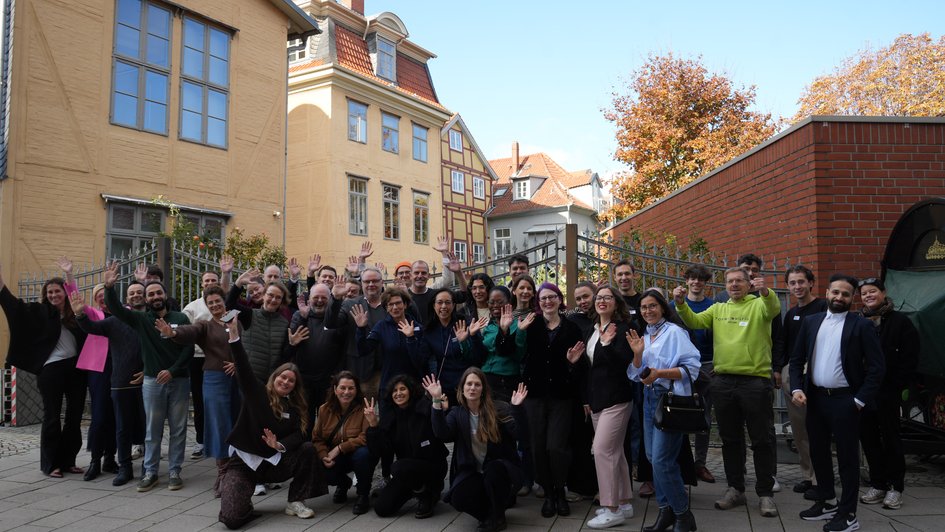
For the fifth time, Ostfalia is offering founders a platform through its Startup Lunch. This time, the focus is on international start-up stories, cultural diversity and people who are making a difference with their ideas.
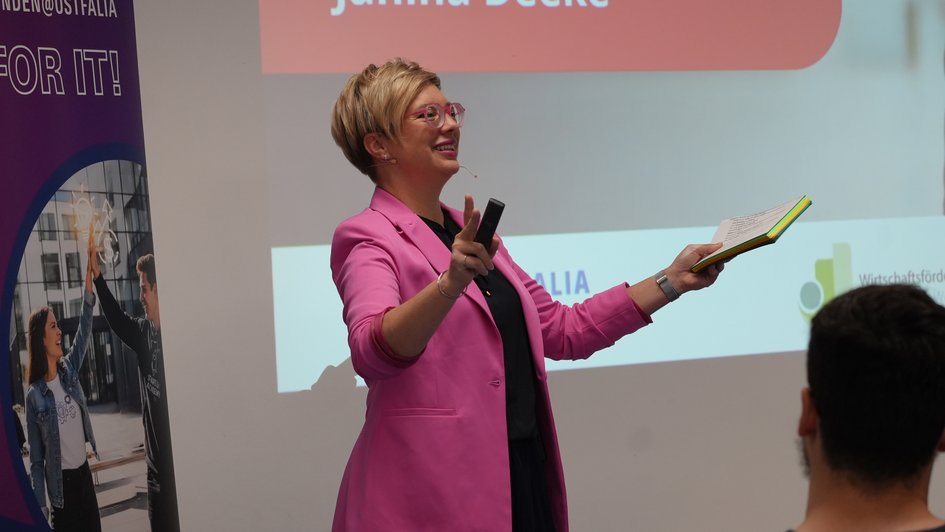
Janina Deeke, founder of Bunt gesagt (external link, opens in a new window), will be hosting the programme; before setting up her own business, she worked as a bilingual presenter and speaker on cruise ships for seven years. She opens the event by highlighting the particular challenges faced by international founders: “Sometimes, it takes a great deal of courage to take that first step from an idea to action. All the more so when you’re doing it in another country, another language or another culture.”
Prof. Dr Ina Schiering, Vice-President for Research, Development and Technology Transfer, makes it clear in her official welcome address that Ostfalia can help in this regard. She says: “For us at Ostfalia, two aspects are particularly important in this context. Firstly, we are very proud that, around three years ago, we launched GRÜNDEN@OSTFALIA, an initiative to establish a start-up programme. We support start-ups in further developing their ideas and putting them into practice. For whilst the world is now bringing its products, resources and ideas to Wolfenbüttel, ideas from our region also have the potential to make a difference on the international stage. Our second focus is the SONNECT network, which brings founders together with partners who support them on their journey.”
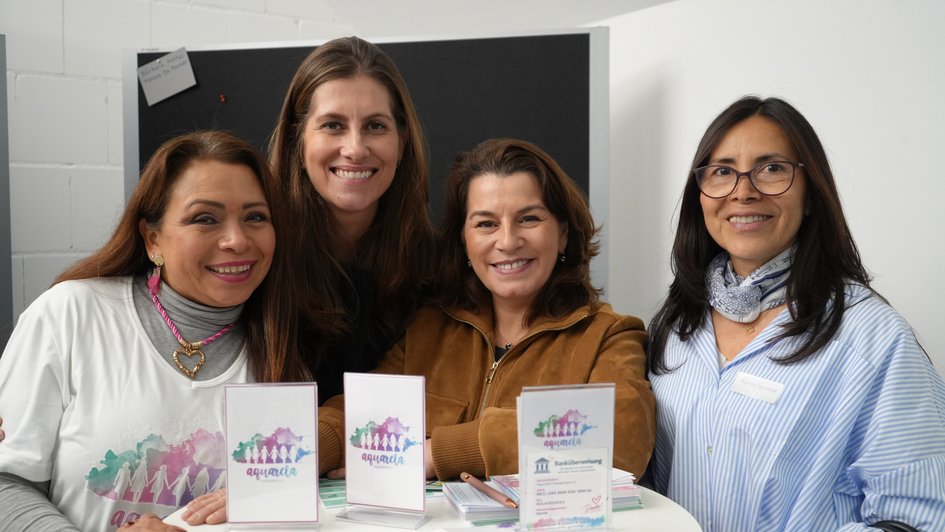
First keynote: Bárbara Matys Moraes de Macedo from Aquarela Frauengruppe e. V.
Bárbara Matys Moraes de Macedo from Aquarela Frauengruppe e. V. (external link, opens in a new window) demonstrates in the first keynote talk at the Startup Lunch just how important networks are, not only for bringing people together but also for fostering a sense of belonging. Her organisation was founded five years ago by a small group of women from Brazil who wanted to support other migrant women. Today, more than 240 members from over 20 countries are involved with Aquarela. “We’ve grown very quickly,” says Matys Moraes de Macedo. And through joint projects with organisations such as Ostfalia, the association has so far reached several thousand people.
The focus of their work is on bringing women into contact with one another and offering them opportunities to interact. “We organise lots of projects and events where women can get to know one another and, for example, learn German.” At the same time, however, the association also provides a space for women to express their own language and cultural identity, which is an important part of settling into their new home.
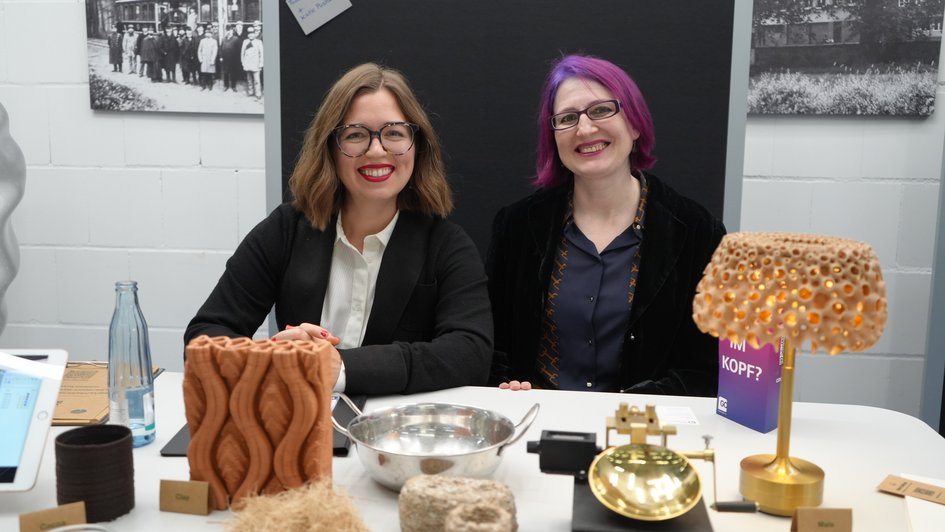
Second keynote: Thea Maykl and Katie Pushkina from WeNest Buildings
The second keynote talk, delivered by architect Thea Maykl and business strategist Katie Pushkina, also centres on the theme of a new home. Together, they have founded WeNest (external link, opens in a new window), a company that is rethinking sustainable construction. Instead of relying on concrete – a CO₂-intensive building material – the pair favour natural, earth-based and recyclable materials. In doing so, they combine traditional earthen construction methods with modern technologies such as artificial intelligence, parametric design and industrial 3D printing. In this way, they aim to pioneer new approaches to resource-efficient architecture.
Pushkina explains: “Just as in ancient times, we source the earth we need for our building projects directly from the ground beneath our feet. We analyse it and, where necessary, supplement it with additives such as mycelium, sisal or cinnamon. Just as birds build their nests from materials found in their surroundings – hence our name, WeNest – we create our houses from what is already available on site, and then print them layer by layer using a 3D printer.”
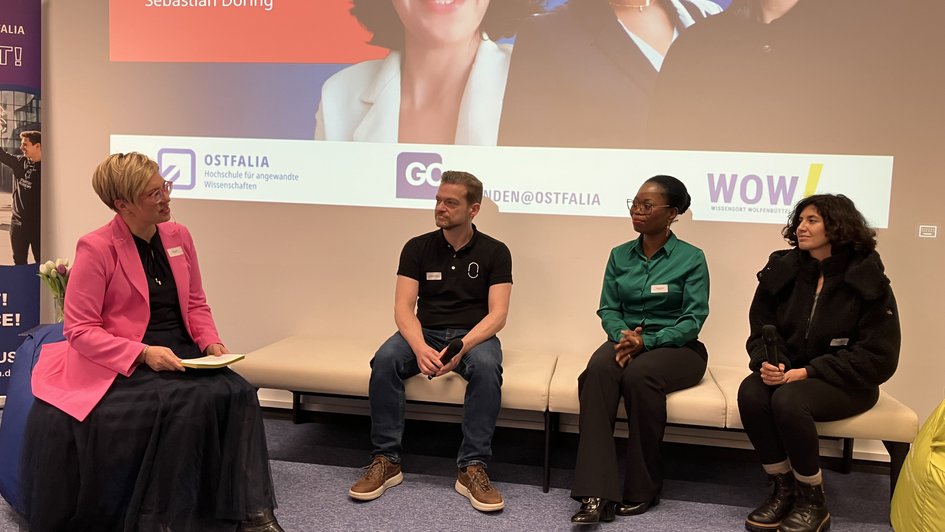
In the panel discussion: Sebastian Döring, Alvine Umland and Mariana Solorzano
In the panel discussion, Alvine Umland, founder of Umland (external link, opens in a new window), Mariana Solorzano, founder of Sprachschule Aktiv (external link, opens in a new window) & Programa Médicos Latinos (external link, opens in a new window), and Sebastian Döring, founder of Lilian Labs (external link, opens in a new window), will talk about their experiences of setting up a business. Solorzano, for example, who came to Germany as a doctor at the age of 22, explains that it had always been her dream to run her own business. Setting up a language school was an obvious choice for her because her collaboration with an existing institution wasn’t going smoothly. It was clear to her: “I have to do this myself. It wasn’t my plan – I’m a senior consultant at a hospital – but I knew how it needed to work.”
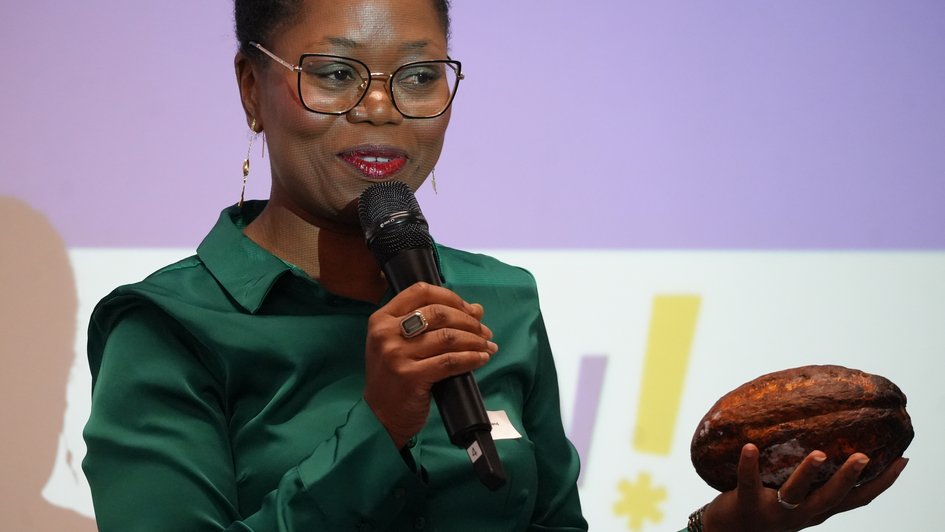
Alvine Umland, who is originally from Cameroon, also offers language lessons. However, her business model also encompasses other areas that promote exchange between Cameroon and Germany. Umland teaches French and German, places workers and skilled staff, provides study and integration advice, organises and arranges trips, and sells coffee and cocoa from organic and sustainable farms. Selling her family’s agricultural produce – such as peanuts at the market – was part of her everyday life even as a child. She laughs and says: “That had nothing to do with child labour; it was simply a matter of course to help out in the family business, and I really enjoyed it too.”
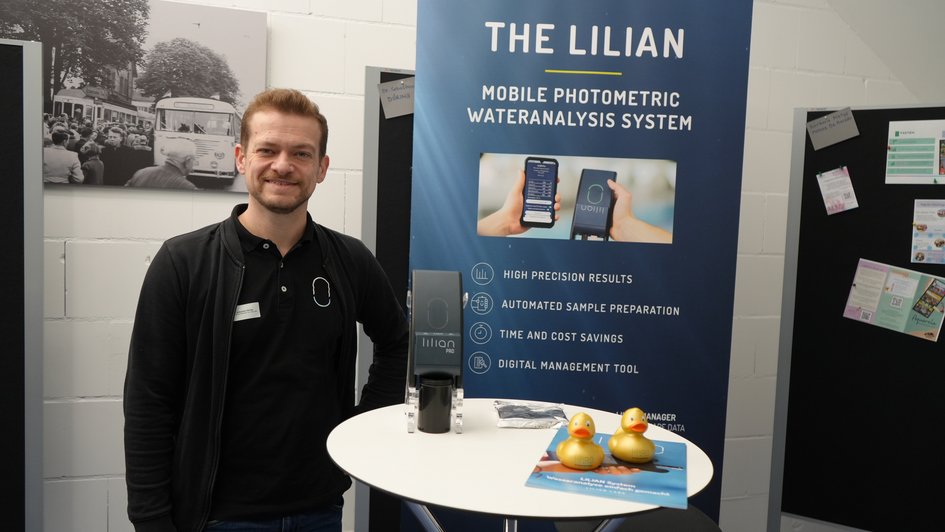
Sebastian Döring provides an insight into his company, Lilian Labs, which he founded in Braunschweig together with two fellow students. The company develops and operates a digital water analysis system that quickly measures key water parameters and automatically records the results. It is used, amongst other things, in swimming pools and for monitoring drinking water. Döring points out that interdisciplinarity, just like internationality, can be challenging, as misunderstandings can easily arise when an electrical engineer speaks to a physicist or a chemist. Döring: “It’s not uncommon for people to talk at cross-purposes.”
When asked what advice he, as an experienced founder, has for future entrepreneurs, Döring recommends bringing together people who are as diverse as possible, “not just those with international experience and connections, but also different personalities. “This brings a certain diversity, which in turn means that you sometimes question your own assumptions in the right places.”
