

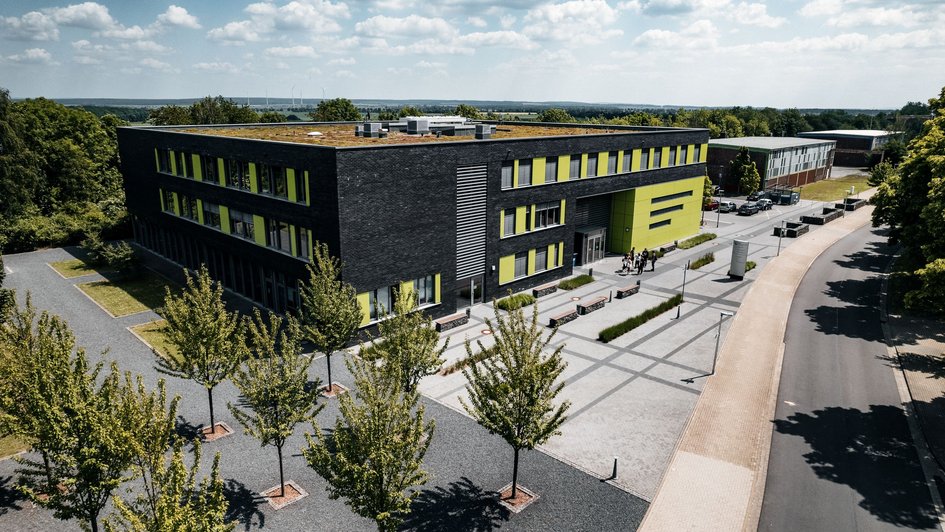
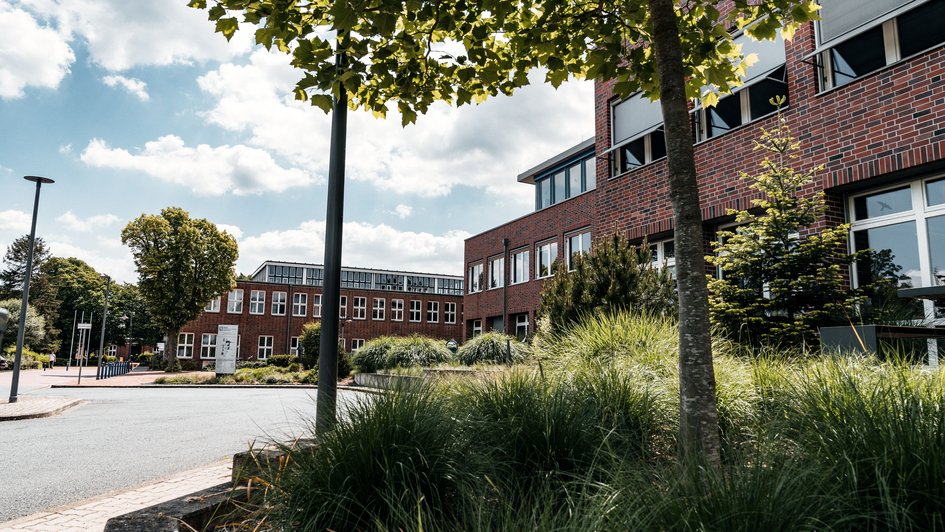
- Flexobus provides a vital public transport link between the campus and Salzgitter-Bad, Salzgitter-Ringelheim, as well as the greater Braunschweig, Hildesheim, Hanover and Goslar areas.
- During the lecture-free period, Flexo is the only direct public transport link from the campus for around 1,800 students and 100 staff members.
- Should funding for Flexo come to an end, there is a risk of a significant deterioration in study conditions – particularly given the already rising cost of living.
- A reliable public transport link enhances educational opportunities, helps secure a skilled workforce and boosts the quality of the location. Ostfalia is therefore committed to finding a joint, long-term solution with the local authority and the region.
A reliable public transport link is an important prerequisite for equal educational opportunities. Ostfalia University of Applied Sciences is therefore campaigning to retain the Flexo service to the Calbecht campus in Salzgitter. Around 1,800 students rely on good and reliable access to the university’s campus in Salzgitter, which is situated in a relatively rural area. The Flexobus is a flexible on-demand bus service (call-and-collect bus) in the Braunschweig region. Where required, it serves, amongst other routes, the journey between the Salzgitter-Ringelheim and Salzgitter-Bad railway stations and the Ostfalia Campus in Salzgitter-Calbecht. In this way, Flexo enables many students to travel flexibly – regardless of whether they have their own car.
“In reality, only the Flexobus provides a competitive public transport link between the campus and the greater Braunschweig, Hildesheim-Hanover and Goslar,” explains Prof. Dr Marc-Christian Ollrog, Dean of the Faculty of Transport, Sport, Tourism and Media in Salzgitter. During the months of January/February and July/August, when many students and staff are present on campus despite there being no lectures, Flexo is the only direct link to the rural campus. The increasing number of Flexo journeys from the campus to SZ-Bad and SZ-Ringelheim bears this out.
Critics point to the strained financial situation in public transport. “Everyone involved is aware of the financial responsibility,” said Volker Küch, President (m.d.W.d.G.b) of Ostfalia University of Applied Sciences. At the same time, however, the discussion should not be reduced solely to the immediate operating costs: “A good public transport link is an investment in the future, in educational equity, in securing a skilled workforce and, specifically, in the quality of the location.” The currently known construction plans for local rail services are already jeopardising the location’s reliable connections to the wider metropolitan areas. If students were unable to reach the campus reliably, this would result in significantly higher societal costs in the long term, for example due to more difficult study conditions, longer study times or a reduced appeal of the university.
“Anyone who wants to study must be able to reach the campus reliably and affordably. Mobility must not be a barrier to education,” emphasises Dean Prof. Dr Marc-Christian Ollrog. 51 per cent of students come from non-academic backgrounds and are particularly hard hit by rising living costs: high fuel prices are also currently putting a strain on study conditions.
The day-to-day reality of student life illustrates the specific consequences that limited public transport links can have. “The Flexo is particularly important for students without their own car. It enables flexible travel to and from campus, even outside regular university bus timetables, during the lecture-free period, or in the event of delays and cancellations,” emphasises Fabienne Pieper from the ASTA Executive Committee in Salzgitter.
Ostfalia is calling on local and regional authorities to work together to secure a viable and, above all, long-term solution for public transport links to Ostfalia’s largest faculty, which has around 1,800 students and over 100 staff at its Salzgitter campus. The Faculty of Transport, Tourism, Sport and Media’s close integration into the local and regional economy through a wide range of partnerships strengthens the labour market and the region’s economic vitality. Similarly, the university provides access to educational opportunities and, since its foundation, has enabled thousands of people from non-traditional academic backgrounds to access higher education. An efficient transport link also strengthens the university as an employer brand, supports students in their day-to-day studies and contributes to sustainable mobility.
Background:
Ostfalia University of Applied Sciences, Salzgitter Campus
Founded in 1993, the Faculty of Transport, Tourism, Sport and Media is currently Ostfalia’s largest faculty, with around 1,800 students enrolled in more than 20 Bachelor’s and Master’s programmes. New additions to the degree programme portfolio since 2025 include Applied Psychology (B.Sc.) and Marketing (B.A.). The faculty demonstrates particular research strength in the fields of cycling and media.
Quotes:
President (m.d.W.d.G.b.) Volker Küch:
“Good public transport links to Ostfalia’s largest faculty are an investment in the future, in educational equity, in securing a skilled workforce and, quite directly, in the quality of Salzgitter and the region as a location.”
“Connecting the campus to the region’s economic hubs is, not least, a major selling point for Ostfalia’s employer brand in the competition for top talent.”
Dean Prof. Dr Marc-Christian Ollrog:
“Anyone who wants to study must be able to reach the campus reliably and affordably. Mobility must not be a barrier to education.”
“More than half of our students come from non-academic backgrounds and are particularly affected by rising living costs and restrictions on local public transport. High fuel prices effectively act as a barrier to education and further worsen study conditions. With tuition fees that are high by German standards, Lower Saxony is already at a disadvantage.”
“In reality, only the Flexobus provides a competitive public transport link between the campus and the greater Braunschweig, Hildesheim-Hanover and Goslar areas.”
Fabienne Pieper, AStA Executive Board, Salzgitter:
“The Flexo is particularly important for students without their own car. It allows for flexible travel to and from the campus, even outside regular university bus timetables, during the lecture-free period, or in the event of delays and cancellations.”
Students at the Salzgitter campus:
Jan-Frederik Rust:
“The Flexo service usefully complements the existing bus network in Salzgitter, as it enables simple and, above all, fast connections that aren’t quite as easily achievable with the current bus services. For example, a direct connection from the university to Salzgitter-Ringelheim station. Furthermore, the university bus timetable is closely aligned with the academic timetable.”
“If someone wants to spend some time on campus after a lecture – in the library, for example – the Flexo offers a flexible way to leave the campus. The same naturally applies to any appointments or events that aren’t tied to the timetable. For me, the Flexo was the only way to leave the campus, particularly for lectures on Fridays.”
Heyam Orrabi:
“Firstly, I live in Braunschweig and don’t currently own a car, so I’m constantly reliant on public transport. Secondly, the Flexo is a very helpful solution for many students, particularly during the exam period. That’s because the direct connection to the university is suspended during this time.”
Daniel Peters:
“The Flexo is an important service that makes the university accessible, especially when the university bus isn’t running. There’s no university bus back, particularly after late-evening classes and on Friday afternoons, so the Flexo remains the only option.”