
Plastics Forum
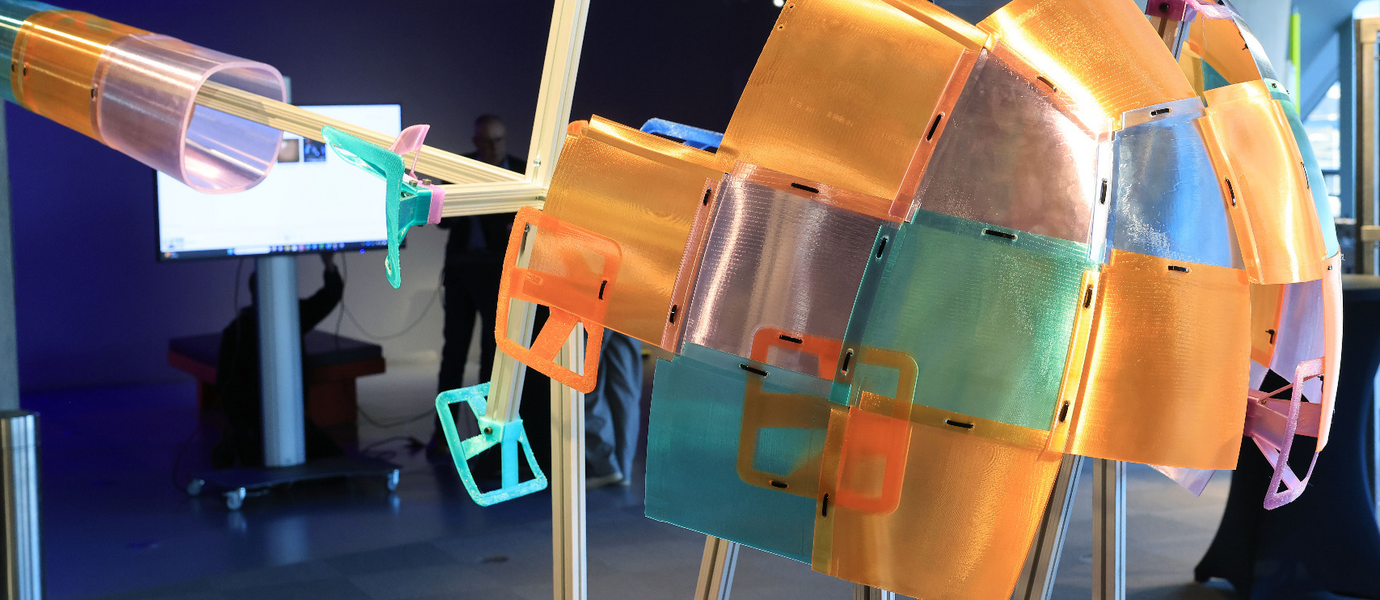
How can the same material be both a valuable resource and a pollutant? Discover the ‘Plastic Comet’ and the exhibits that highlight the different properties and challenges associated with plastics.
A material with two sides
Plastics are versatile, lightweight, strong and mouldable. Their properties make them essential materials in many areas of life. At the same time, they can become a burden on the environment if plastic waste is not collected and recycled properly. The longevity of plastics and the wide variety of different material compositions also pose challenges for recycling.
The Plastics Forum at the phaeno Science Centre in Wolfsburg brings these different perspectives together. Using illustrative objects and an artistic installation, the exhibition area demonstrates why plastics are valuable materials and why their use simultaneously raises questions about resource conservation, product design and environmental responsibility.
The Plastic Comet: A work of art that grows with us
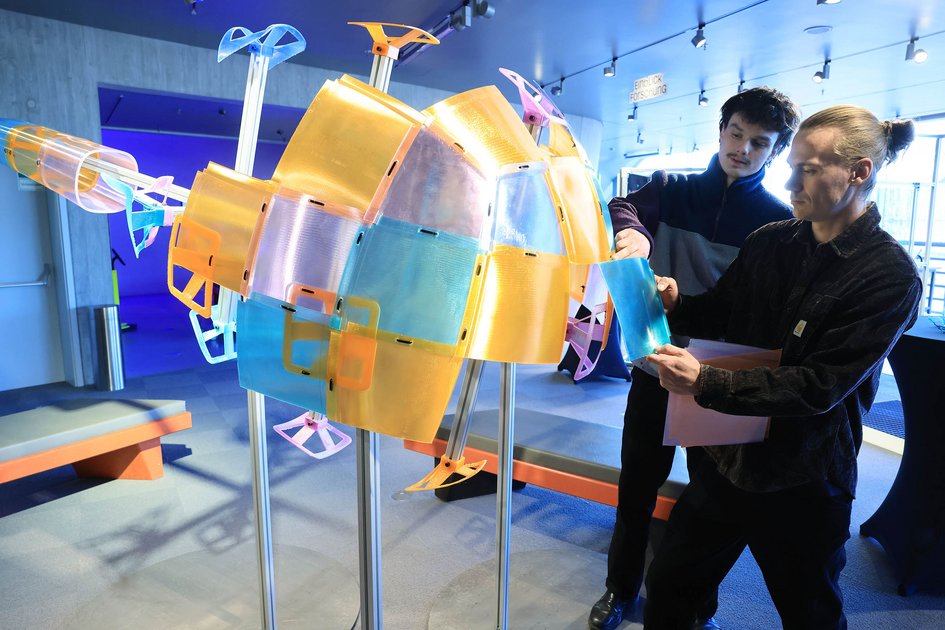
At the heart of the forum stands the Plastic Comet. This colourful installation combines art, design and science communication. It addresses the central question of how people respond to the challenges posed by plastics.
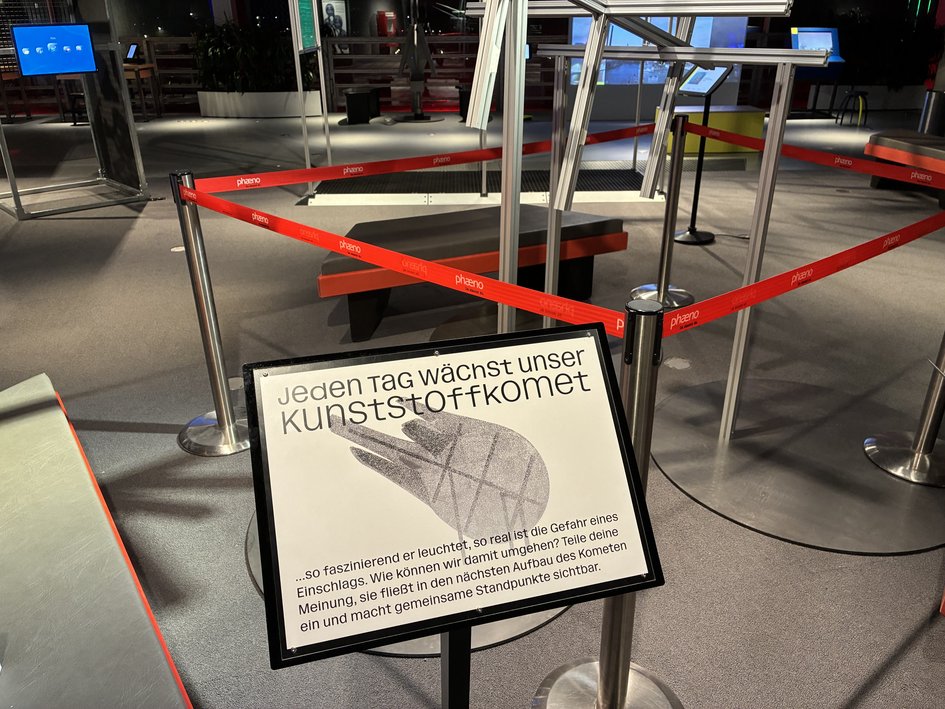
Visitors can identify with one of four possible reactions. Their choices are visualised through coloured, 3D-printed components on the comet. In this way, the installation grows in response to audience feedback and becomes a collaboratively created work of art.
The comet brings to light different reactions to a complex social issue. It not only conveys information about plastics, but also directly involves visitors in the debate.
Three stops – three perspectives on plastics
Durability of plastics
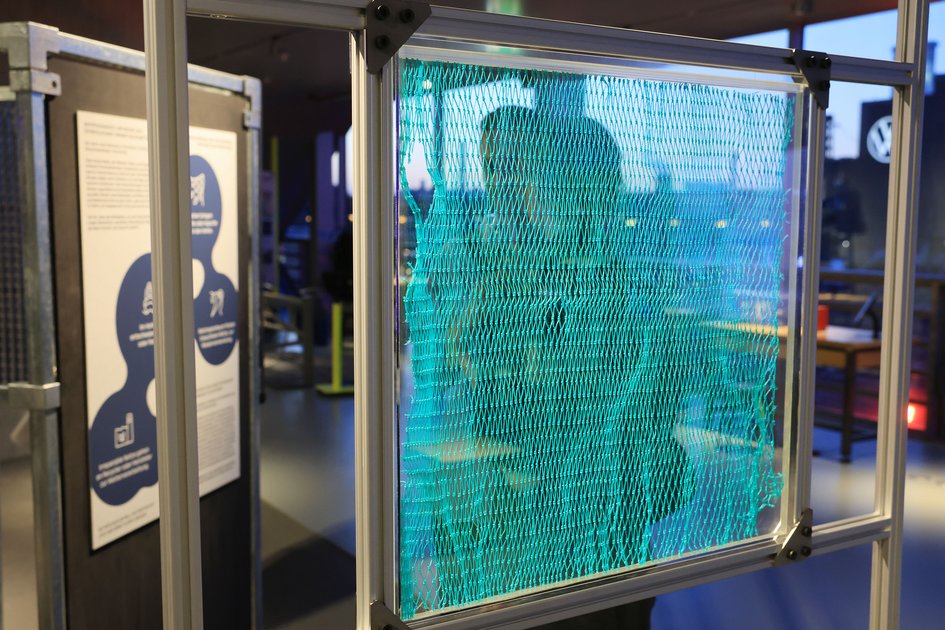
Plastics can remain stable over long periods of time. Whilst this property is desirable for many applications, it can become a problem if plastic products end up in the environment or are not disposed of properly. Using various stages of fishing nets as examples, this exhibit demonstrates how plastic materials change through use and ageing, and how microplastics can be produced in the process.
The examples make it clear that the durability of a material cannot be considered in isolation. It is also crucial to consider how long and under what conditions it is used, and what happens to it after it has been used.
The variety of plastics
Not all plastics are the same. Many everyday objects are made up of several materials or of layers of plastic bonded together. Such combinations can enable specific functions, but often make separation and recycling more difficult.
Cross-sections of everyday objects provide an insight into their internal structure. They show the different materials that go into a single product and why its composition is important for subsequent recycling options.
This exhibit thus draws attention to a question that is already relevant during the design and manufacture of products: How can materials be used and combined in such a way that they can be recycled as effectively as possible after use?
Plastic icons
Plastics have shaped the development of numerous products. Their light weight, mouldability and durability have enabled new product forms and applications, and have influenced industrial mass production.
Historical artefacts illustrate how these material properties have enabled innovation and transformed everyday life. This section therefore focuses not only on today’s challenges, but also on the significance of plastics for the history of products and industry.
It demonstrates that the assessment of a material must take various perspectives into account: its function and utility, as well as the consequences of its manufacture, use and disposal.

From exhibition piece to the bigger picture
The sections of the forum shed light on different aspects of the same material. Together, they demonstrate that the challenges surrounding plastics cannot be solved by recycling processes alone. Product design, the selection and combination of materials, and how we handle them in everyday life are also crucial.
The Forum combines scientific information with illustrative exhibits and invites visitors to question their own perspectives on plastics. It provides a starting point for exploring how materials can be used in future to conserve resources and better close material cycles.