
Plastics Future Lab
Examine, sort, try out: hands-on experiments demonstrate how plastics can be examined, separated and recycled.
From knowledge to hands-on experimentation
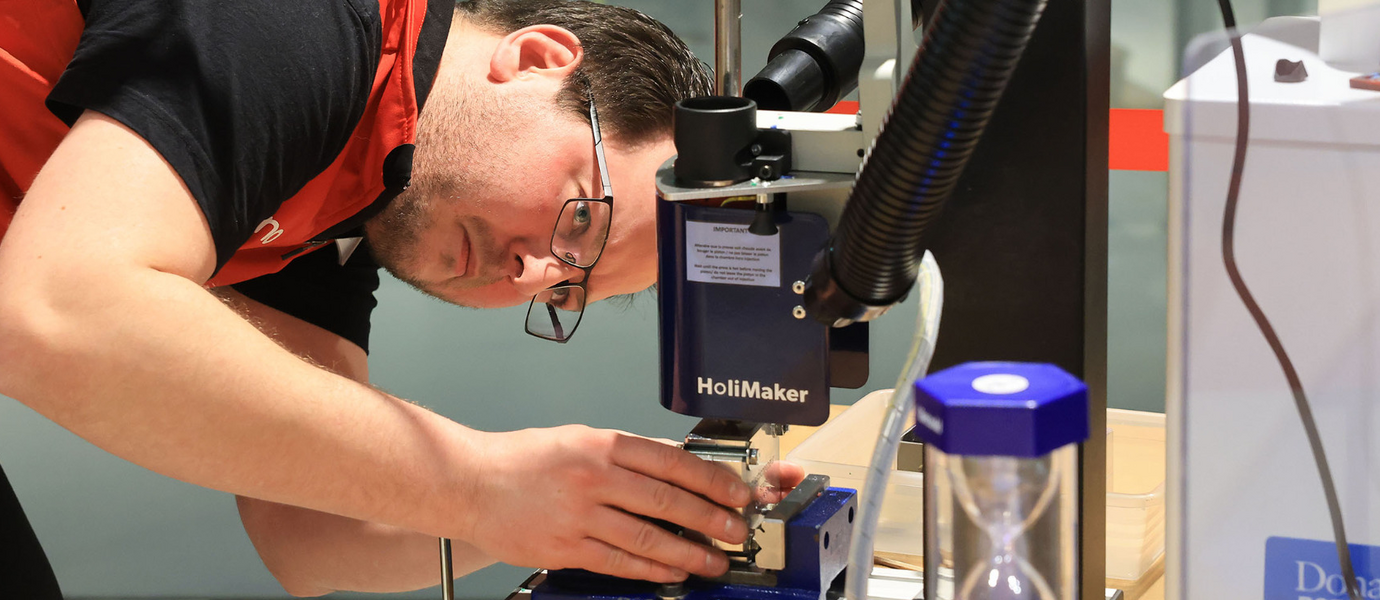
How can plastics be examined, distinguished and recycled? In the Plastics Future Lab, visitors can explore the material for themselves. Hands-on experiments bring its properties to life and demonstrate the steps required to prepare plastic materials for recycling.
This initiative adds a practical dimension to the Plastics Forum: rather than simply learning about materials through exhibition displays, visitors can examine, sort and experiment with them for themselves.
Examining and distinguishing between plastics
Not every plastic can be processed or recycled in the same way. This makes it all the more important to examine its properties and composition.
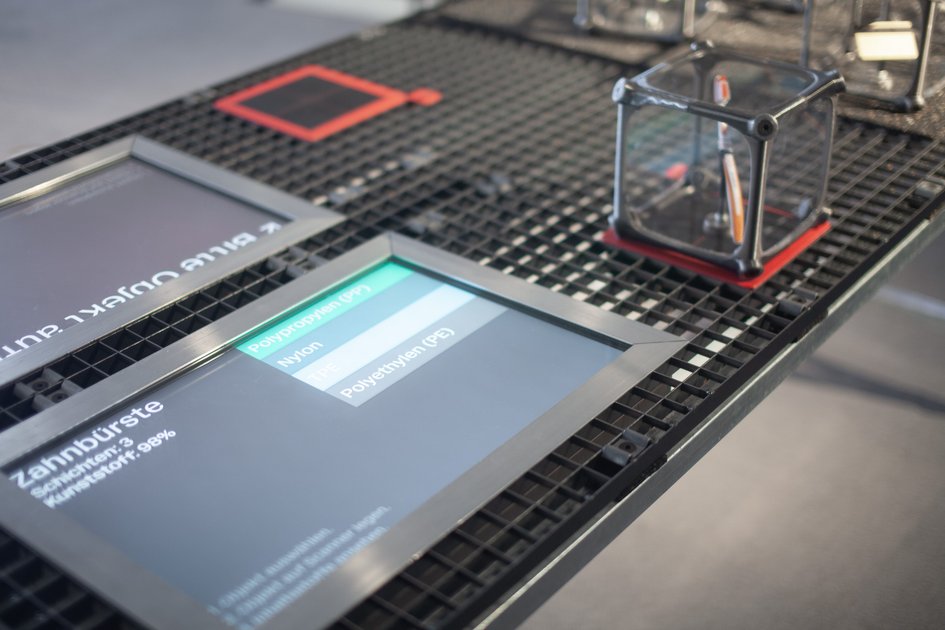
The Future Lab uses a variety of methods and experimental stations for this purpose. These include, for example, an infrared scanner that can be used to analyse and distinguish between materials. Further experiments enable us to examine plastics more closely and explore their properties.
This makes it clear that the recycling of plastics does not begin only at the processing stage. Identifying, analysing and sorting the materials also plays an important role.
From used materials to recycling
What happens to plastic once a product is no longer needed? In the Future Lab, visitors can gain hands-on experience of the stages involved in material processing and recycling.
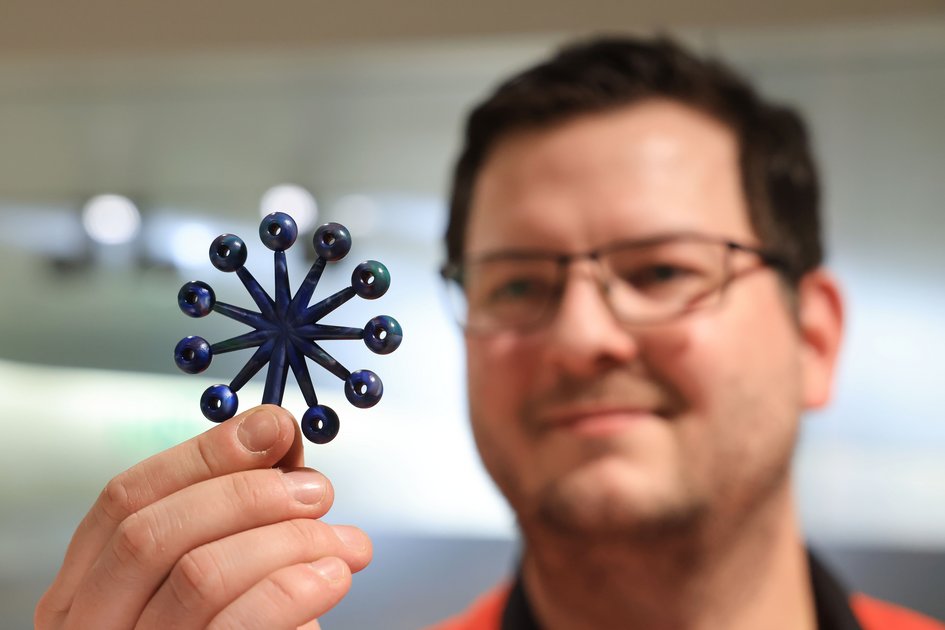
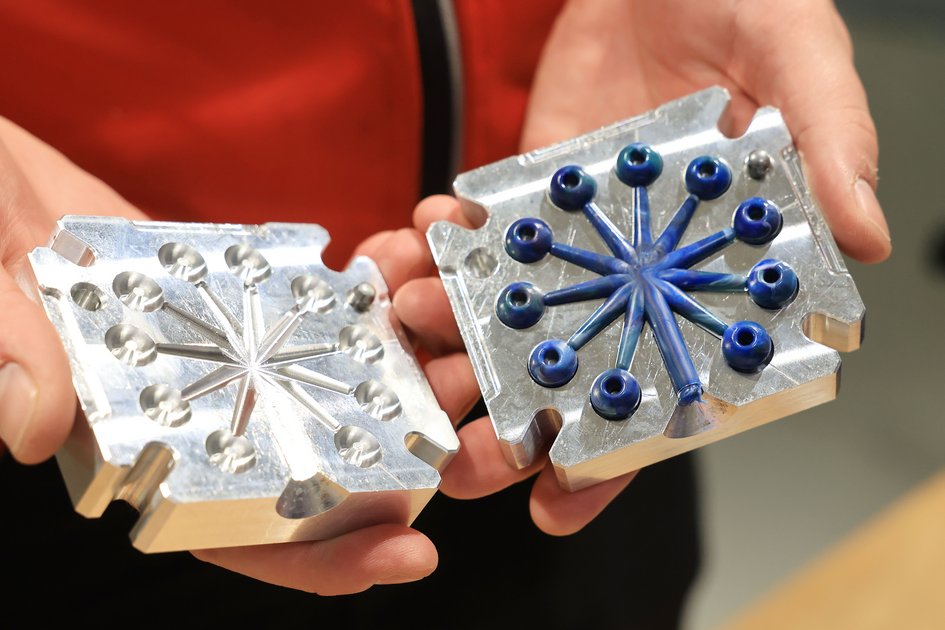
By shredding and reprocessing used plastics, visitors can experience first-hand how waste material can be turned into new material. Creative activities also explore the possibility of reusing waste materials and old fishing nets.
These hands-on experiments thus illustrate the possibilities offered by recycling and why the material properties and condition of used products must be taken into account in the process.
Experimenting in the open laboratory
The Future Lab is designed as an open-access laboratory facility for members of the public. It provides easy access to the topic of plastic recycling and encourages visitors to explore individual experiments independently.
By trying things out for themselves, visitors can experience scientific principles first-hand. They can investigate questions, compare materials and understand how individual steps are linked to the recycling of plastics.
School workshop: ‘Is that plastic or can it be thrown away?’
To complement its open laboratory programme, phaeno offers the workshop ‘Is that plastic or can it be thrown away?’ for pupils in Years 7 to 10.
In the workshop, pupils explore the properties of plastics, waste separation and the challenges of recycling. Through hands-on activities, including shredding and reprocessing used plastic, they learn through practical examples how materials can be reused.
The workshop combines hands-on work with the question of how plastics can be used as sensibly as possible and returned to material cycles after use.
Understanding the circular economy in practice
The Future Lab illustrates that the recycling of plastics involves several interlinked steps. Materials must be identified, analysed, sorted and prepared for further processing.
By experiencing these steps for themselves, visitors can gain a better understanding of the opportunities and challenges of the circular economy. The Future Lab thus provides a practical introduction to a topic that concerns both technical processes and the everyday use of materials and resources.